Best Self-Inflating Camping Mattress Options for Comfort and Easy Setup
Answering the call for portable, comfy sleep outdoors, these self-inflating camping mattresses blend built-in pumps or foot pumps with supportive foams and durable fabrics. They’re ideal for car campers, backpackers who need quick setup, and anyone seeking better ground comfort. The top picks below balance thickness, stability, and ease of use, so you’ll find a model that fits your tent, vehicle setup, and sleep position.
| Product | Key Benefit |
|---|---|
| OGERY Self-Inflating Sleeping Pad with Built-in Foot Pump | Hybrid foam-and-air support with 3″ thickness for versatile comfort |
| FUN PAC Camping Sleeping Pad | Ultralight, up to 78x27x8 and built-in pillow for compact carry |
| OGERY Sleeping Pad, Ultralight Inflating Pad | 6″ thickness for extra support with easy foot pump |
| FNARMW Double Sleeping Pad | 6″ thick, two-person, built-in foot pump for paired comfort |
| Coleman Self-Inflating Sleeping Pad with Pillow | No pump needed, lightweight with integrated pillow |
OGERY Self-Inflating Sleeping Pad With Built-In Foot Pump

Best for: car campers and weekend travelers who want stable support without extra gear. This pad uses a 3″ high-density foam core and a hybrid foam-and-air structure to reduce bouncing and provide even support for shoulders and hips in various sleeping positions. The built-in foot pump allows quick firmness adjustments after a long day outside, avoiding mouth inflation or separate pumps. It’s ideal where a sturdy, non-slip base matters in tents or car setups. Caution: the foam expansion can take a moment to fully settle after unpacking.
FUN PAC Camping Sleeping Pad With Built-In Foot Pump

Best for: backpackers and hikers who want ultralight gear without sacrificing comfort. This pad measures up to 78x27x8 inches when inflated and includes egg-shaped air cells plus a built-in pillow for neck and back support. A two-layer valve minimizes leaks, and inflation is quick—30 to 60 seconds—with deflation in one second. It’s highly portable, fitting into a compact pack for trekking or travel. Limitation: heavier users or very rough terrain may notice less ground isolation compared with thicker models.
OGERY Sleeping Pad Ultralight With Built-In Foot Pump

Best for: solo hikers who want a lighter, compact option with solid cushioning. This 6″ thick pad combines a built-in pillow and a foot pump for quick setup. It’s designed to be lightweight—yet still provide substantial support—and uses dual-layer valves to speed inflation and reduce leaks. A potential trade-off is that the increased thickness adds bulk when packed, so verify your pack capacity before choosing.
FNARMW Double Sleeping Pad With Foot Pump

Best for: couples or camping partners who need a two-person surface with reliable air support. The FNARMW pad offers 79″ x 55″ x 6″ after inflation and supports up to 800 lbs. The built-in foot pump eliminates mouth inflation and uses a drawstring support system to distribute weight evenly. It’s a strong choice for shared tents or campers who want to avoid separate inflators. Limitation: bulkier when packed, so ensure storage space in your pack or vehicle.
Coleman Self-Inflating Sleeping Pad With Pillow
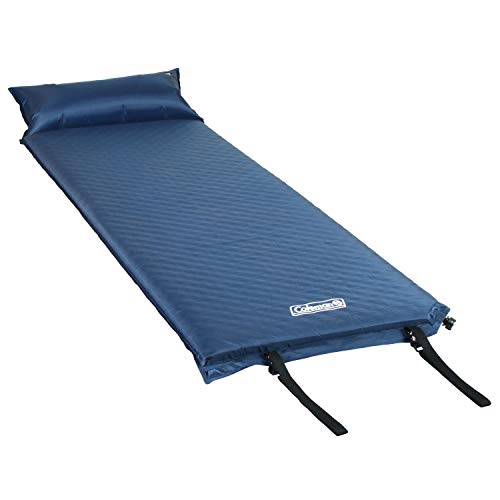
Best for: casual campers who want simple setup and built-in comfort. This Coleman pad emphasizes easy setup without a separate air pump, including a pillow for head support. It’s lightweight and portable, suitable for quick overnights or family car camping. The trade-off is that this model may offer less thick support than heavier foam-core options, so consider your sleep position and ground hardness when selecting.
Buying Guide: Self-Inflating Camping Mattresses
- Thickness and support: Thicker models (5–6 inches) offer more cushioning for side sleepers and rough ground but are heavier and bulkier to pack. For solo backpacking, 3–4 inch pads can save weight while still delivering comfort.
- Inflation method: Built-in foot pumps are common for quick setup and hygiene. Detachable electric pumps provide fast inflation but add battery considerations. Consider how you’ll inflate in wind, cold, or wet conditions.
- Material durability: Look for abrasion-resistant fabrics and reinforced bottoms to minimize wear from tent floors, rocks, and sticks. Non-slip bases help keep the pad from shifting during the night.
- Weight and packability: Ultralight options suit hikers, while thicker pads with built-in pillows are ideal for car camping. Check packed dimensions to ensure compatibility with your backpack or car trunk.
- Size and fit: Measure your sleeping space inside your tent. Wide or double-width pads are best for couples or larger tents, while standard widths suit solo sleepers with limited space.
- Repairability: Some models are easier to patch if punctured. Evaluate the repair options and patch kits compatible with the fabric and valves.
- Temperature and insulation: Higher R-values indicate better insulation in cold weather. If camping in chilly conditions, choose pads with higher R-values or added foam for warmth.
FAQs
- What is a self-inflating pad? A self-inflating pad combines foam and air to provide cushioning. It inflates automatically when opened, with added manual pumping for firmness as needed.
- Are self-inflating pads good for cold weather? Yes, pads with higher thickness and insulation (R-value) perform better in cold conditions, helping maintain warmth and comfort on cold ground.
- How do I choose the right thickness? Side sleepers often prefer 5–6 inches for shoulder and hip support, while lighter or solo hikers might opt for 3–4 inches to save weight.
- Can I use these pads in a tent with a picnic table? Yes, most self-inflating pads work well on flat tent floors, car camp cots, or level ground near tables, but ensure the base is stable and non-slip.
- Do these pads require separate pumps? Some models include built-in foot pumps or electric pumps; others are designed to be inflated by mouth as a backup. Check the product details for specifics.
- How long do they last? With proper care, most self-inflating pads provide years of use, but long-term durability depends on fabric, seams, and valve integrity.