Best Pressure Sore Prevention Mattress for Bedridden Comfort and Healing
If you’re looking for a reliable pressure sore prevention mattress, this guide highlights top options designed to reduce ulcers and improve circulation for bedridden or limited-mobility individuals. These pads use alternating pressure to redistribute weight, support skin health, and minimize uncomfortable pressure points. The best picks are suited for caregivers, hospitals, and home care users who need consistent, quiet operation and easy maintenance. Below, you’ll find clear comparisons, who each product is best for, and practical buying tips.
| Product | Best For | Key Benefit |
|---|---|---|
| Vive Alternating Air Pressure Mattress Pad | Caregivers seeking a trusted hospital-grade topper | Whisper-quiet pump and 130 air cells for even pressure |
| Lunderg Alternating Air Pressure Pad (Static & Quiet) | Home care and long-term bed care | Static mode for stable resting surface |
| Kekoy 130-Cell Mattress Pad | Elderly care and early stage prevention | 130 bubble cells with waterproof cover |
| MedVance Premium Alternating Pad | Hospitals and care facilities | Ultra-quiet digital pump with alarms |
| Lunderg Queen Size Alternating Pad | Queen-size beds and larger individuals | Large surface with quiet operation |
Vive Alternating Air Pressure Mattress Pad
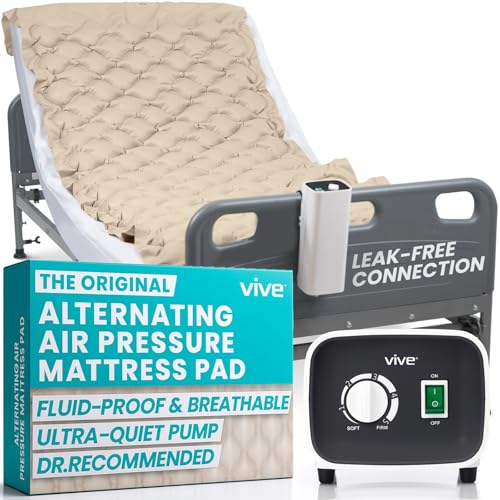
Best for caregivers and families seeking a trusted, hospital-grade topper. The Vive pad uses 130 air cells with a proprietary wave-like therapy that alternates pressure to relieve sore points and improve circulation. The 22 dBA whisper-quiet pump enables restful sleep with multiple pressure levels for a customized fit. A risk with all alternating pads is potential leakage; Vive addresses durability with heat-sealed cells to minimize that risk. Choose this if you value a proven, low-noise solution for long-term care and comfort.
: Bedridden individuals who need steady pressure redistribution and caregivers who prioritize quiet operation and durability.
Why selected: It combines a large cell array, quiet pump, and dense construction for reliable pressure relief.
Limitations: The setup requires a compatible mattress base; ensure your current bed frame accepts a topper with a separate pump.
Lunderg Alternating Air Pressure Mattress Pad with Static Mode
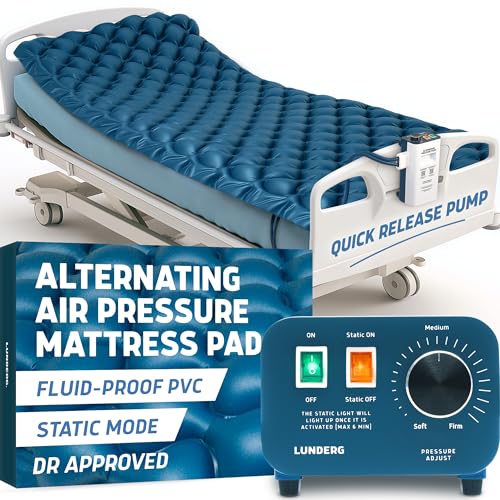
Best for home care and long-term use. This pad supports up to 300 lbs and offers a switchable Static Mode for a stable surface when alternation isn’t needed. The quiet 23 dBA pump and quick connector simplify daily configuration. It’s a strong choice for patients who require both motion relief and the option of a solid resting surface.
Who it’s for: Home caregivers and nursing facilities needing a versatile pad that can adapt to daily care routines.
Why chosen: Static mode provides a reliable alternative for patients who tolerate or prefer non-changing support.
Limitations: Static mode reduces the dynamic relief of alternating cycles; use as needed for comfort and wound prevention.
Lunderg Alternating Air Pressure Pad for Recliner

Best for improving comfort in seating and preventing pressure buildup while sitting. This pad uses 136 air cells for even redistribution while the quiet pump keeps noise minimal. The inclusion of a 4-way stretch cover helps reduce slippage. It’s an excellent choice for users who spend extended time in chairs or recliners.
Who it’s for: Patients who spend significant time in chairs or recliners and need ongoing pressure relief.
Why chosen: Combines comfort, slip-preventing cover, and quiet operation.
Limitations: Primarily designed for recliners; larger beds may require a larger topper or additional mats for full coverage.
Kekoy Alternating Air Pressure Mattress Pad

Best for early-stage pressure sore prevention and elderly care. Kekoy’s 130-air-cell system promotes continuous redistribution to reduce red areas on hips, lower back, and heels. It’s designed with a waterproof cover to simplify cleaning and maintenance. The kit is suitable for home care and hospital use.
Who it’s for: Caregivers managing early-stage risk or residents with limited mobility.
Why chosen: The large 130-cell array supports even weight distribution, which is essential for prevention in ongoing rest.
Limitations: Some users may prefer a more robust pump system for high-density weight distributions; verify compatibility with bed setup.
MedVance Premium Alternating Air Mattress Pad

Best for hospital settings and care facilities needing quiet operation and alarms. The ultra-quiet digital pump (under 20 dB) provides stable airflow with dual pump cores, while the control panel includes alarms for easy monitoring. It supports long-term bed sore prevention and comfort in professional environments.
Who it’s for: Hospitals, nursing homes, and home care programs requiring reliable, low-noise performance and monitoring.
Why chosen: Digital controls and alarms add a layer of care accountability, useful in professional settings.
Limitations: The system may require initial familiarization with the digital controls for caregivers new to this setup.
Buying Guide: Choosing The Right Pressure Sore Prevention Mattress
- Cell count (more cells provide finer pressure distribution), pump noise level, and whether static mode is needed for stable rest.
- Ensure the pad fits your bed size (twin, full, queen) and supports the user’s weight without excessive compression.
- Look for heat-sealed cells and waterproof, easy-clean covers to minimize cleaning time and infection risk.
- Consider whether you need a foam topper, liquid-resistant cover, or a standalone system with a separate pump.
- For home use, a quieter pump and simple controls reduce caregiver fatigue; for facilities, alarms and durable engineering can improve safety and oversight.
Frequently Asked Questions
- What is an alternating pressure mattress pad? A pad with air cells that inflate and deflate in sequence to redistribute weight and reduce pressure points.
- Who should use these pads? Bedridden individuals, those at risk of pressure ulcers, and caregivers in homes or medical facilities.
- How quiet are these pumps? Pumps vary, but many models operate around 22–23 dBA, which is very quiet for a care setting.
- Do these pads require a specific bed frame? Most toppers fit standard hospital or home beds, but confirm dimensions and attachment methods before purchasing.
- Can I switch to a static mode? Several models offer a static mode to keep all cells inflated for a stable surface when needed.
- How often should the cycles run? Many units cycle every 6 minutes to balance relief with rest.