Best Pressure Sore Air Mattress for Bedridden Comfort and Prevention
If you’re looking for an effective pressure sore air mattress, this guide highlights five top options designed to reduce bed sores, boost comfort, and support long-term care at home or in facilities. Each product caters to different needs—whether you need ultra-quiet operation, static mode options, or higher weight support. The following picks are ideal for bedridden individuals, elderly care, and caregivers seeking reliable, medical-grade relief without frequent repositioning.
Summary of selected products
| Product | Best For | Key Benefit | Weight Capacity |
|---|---|---|---|
| Vive Alternating Air Pressure Mattress Pad | Bedridden patients needing continuous relief | 130-cell alternating therapy with whisper-quiet pump | Not specified |
| Lunderg Alternating Air Pressure Mattress Pad (Queen/Static) | Home or hospital care with quiet operation | Static mode option for stable surface | Up to 300 lbs |
| Kekoy 130 Air Cells Pad | Extended bed rest with proactive prevention | 130 bubble cells for even pressure distribution | Not specified |
| MedVance Low Air Loss Mattress Replacement | Care facilities needing low-noise, reliable system | Low air loss with alarms and digital control | Not specified |
| MedVance Premium Alternating Mattress Pad | Long-term bed sore prevention at home | Ultra-quiet pump and 6-minute cycle | Not specified |
Vive Alternating Air Pressure Mattress Pad
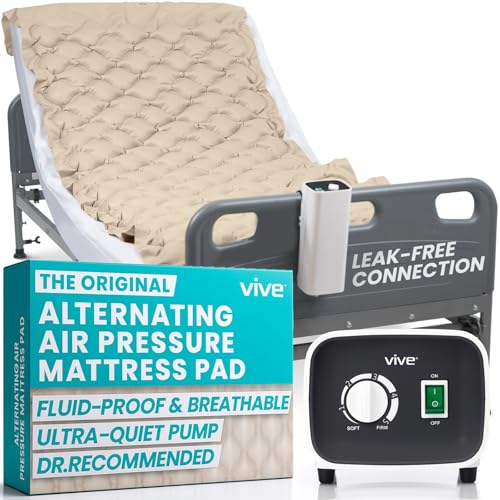
Best for caregivers seeking doctor-recommended relief with a compact, quiet system. The pad uses 130 air cells and an advanced wave-like therapy to distribute weight and relieve pressure spots. The whisper-quiet pump operates around 22 dBA, enabling restful sleep. This option is suited for bedridden individuals who require consistent pressure redistribution and reduced skin maceration.
Who it’s best for and why: Best for immobilized patients who tolerate continuous cycles and for families prioritizing ultra-quiet operation. The included waterproof, breathable ulcer cushion adds protection against moisture. A limitation: data does not specify weight capacity, so verify fit for higher-weight users.
Caution: Ensure proper setup to maintain continuous pressure cycling; malfunction or poor placement can reduce effectiveness.
Lunderg Alternating Air Pressure Mattress Pad (Static Mode)
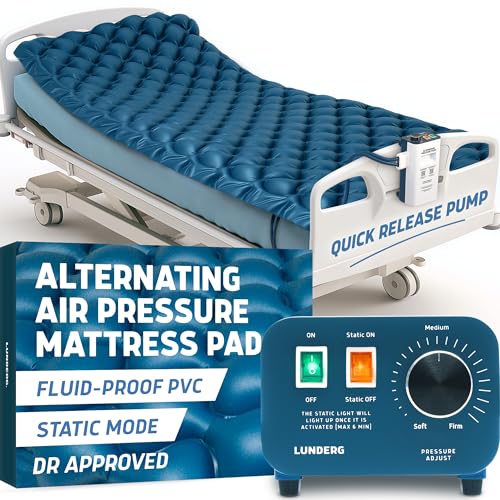
Best for users needing an option to switch from alternating cycles to a stable surface with Static Mode. The quiet pump delivers 23 dBA, and the system supports up to 300 lbs, making it suitable for home care and hospital settings. The pad is designed to reduce turning, boost circulation, and relieve pressure on vulnerable areas.
Who it’s best for and why: Choose this if you want the flexibility of alternating therapy and a stable mode for rest. Limitation: Static mode may reduce the ongoing pressure distribution benefits when not alternating.
Lunderg Queen Size Alternating Mattress Pad
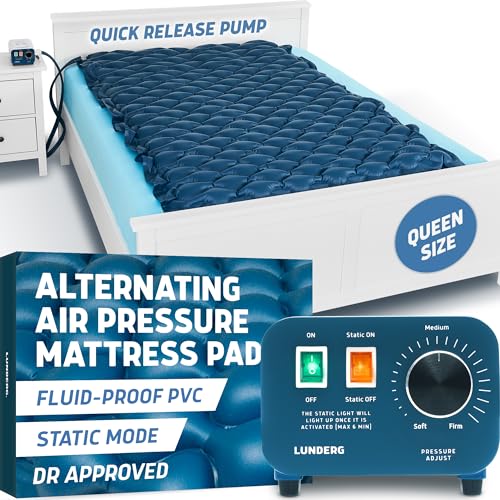
Best for larger beds and heavier users, this queen-size pad fits rooms with standard queen frames and supports up to 320 lbs. It provides a balanced surface with 130 air cells, alternating cycles to redistribute weight, and a quiet pump with Static Mode for rest if needed. Suitable for long-term care at home or in facilities.
Who it’s best for and why: Ideal for larger individuals and couples needing extended bed rest support. Limitation: Queen sizing may require a correspondingly larger top sheet and mattress topper for full bed coverage.
Kekoy 130 Air Cells Pad (Beige)

Best for proactive prevention with extensive cell coverage. Kekoy uses 130 air cells to evenly redistribute weight, helping to prevent early-stage pressure sores and support daily relief. The pad includes a waterproof cover and an adjustable Whisper-Quiet Pump. It’s well-suited for elderly care or post-surgery recovery.
Who it’s best for and why: Choose this for early prevention and smooth weight shifts during long-term bed rest. Limitation: Some users may prefer a higher capacity or different sizing for very tall or wide beds.
Kekoy 130 Air Cells Pad (Beige, 75″ x 35″)

Best for compact spaces and smaller beds, this Kekoy mattress pad uses 130 cells to distribute pressure and comes with a waterproof cover and quiet pump. It’s a practical choice for apartments, dorms, or smaller rooms where space is limited. Best for individuals at risk of Stage 0–1 pressure sores with early redistribution needs.
Who it’s best for and why: Ideal for smaller setups and early prevention. Limitation: Smaller footprint means weight distribution and coverage may be less comprehensive for larger individuals.
Buying Guide: Key Purchase Considerations
What should you check before buying a pressure sore air mattress?
- Therapy type: Alternating pressure vs. static mode vs. low air loss. Choose based on whether you need continuous cycle relief or a stable surface for rest.
- Weight capacity: Confirm the product supports the user’s weight, especially for heavier individuals or shared beds.
- Noise level: Look for pumps labeled as whisper-quiet if noise disrupts sleep or care routines.
- Size and fit: Ensure dimensions fit your bed (twin, full, queen, or custom sizes) and match your room space.
- Durability and maintenance: Heat-sealed air cells and waterproof covers help extend life and simplify cleaning.
- Portability and setup: Consider ease of setup, connector quality, and whether static mode is available for breaks in therapy.
- Care setting: Home care vs. hospital or facility use may influence features like alarms, remote monitoring, or CPR deflation.
Frequently Asked Questions
- What is an alternating air pressure mattress?
It cycles air in and out of multiple cells to redistribute pressure and reduce bed sores. - Who should use these mattresses?
Bedridden individuals, elderly patients, and anyone at risk of pressure ulcers. - Is static mode useful?
Yes, it provides a stable surface when alternating therapy is not needed or to allow rest without movement. - Do these mattresses require special maintenance?
They typically use waterproof covers and heat-sealed cells; regular cleaning and cover checks are advised. - Can these devices be used at home?
Many models are designed for home care and private care facilities, with varying weight capacities and sizes. - Are there safety features to watch for?
Look for alarm indicators and CPR quick-deflate options in digital pumps for emergencies.