Best Pressure Relieving Mattress for Pressure Ulcers
For bedridden or limited-mobility individuals, the best option to prevent and manage pressure ulcers is an alternating pressure mattress pad with a quiet, reliable pump and durable construction. The following five products are among the top choices for home or facility use. They emphasize gentle weight distribution, improved circulation, and easy-to-operate controls. This guide explains who each product is best for, and why it stands out, with practical considerations for selecting the right model.
| Product | Best For | Key Benefit |
|---|---|---|
| Vive Alternating Air Pressure Mattress Pad (Original) | Long-term bedridden care | 130 air cells with wave-like therapy |
| Lunderg Alternating Air Pressure Mattress Pad with Static Mode | Caregivers who want Static Mode | Quiet pump, adjustable soft-to-firm control |
| MedVance Premium Alternating Air Pressure Mattress Pad | Hospitals or home care facilities | Ultra-quiet digital pump with alarms |
| Lunderg PressuRelief Alternating Pad | Enhanced comfort for long rests | PressuRelief Comfort Layer and Static Mode |
| Kekoy Alternating Air Pressure Mattress Pad | Extended bed rest with fresh airflow | Low air loss with enhanced comfort |
Vive Original Alternating Mattress Pad
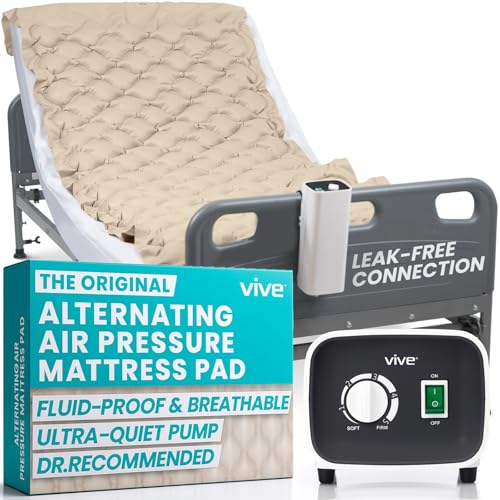
Best for: bedridden patients who need consistent pressure redistribution and low risk of skin damage. This pad uses a 130-cell system with wave-like therapy to evenly distribute weight and relieve pressure spots. It is ideal for long-term care where continuous relief is essential.
Why selected: The 130 air cells and heat-sealed construction minimize leaks and maximize durability, while the whisper-quiet pump supports restful sleep with multiple pressure levels.
Caution: The comprehensive system requires setup with the included pump; if you need a simple replacement pad only, consider a replacement kit option.
Lunderg Alternating Mattress Pad With Static Mode
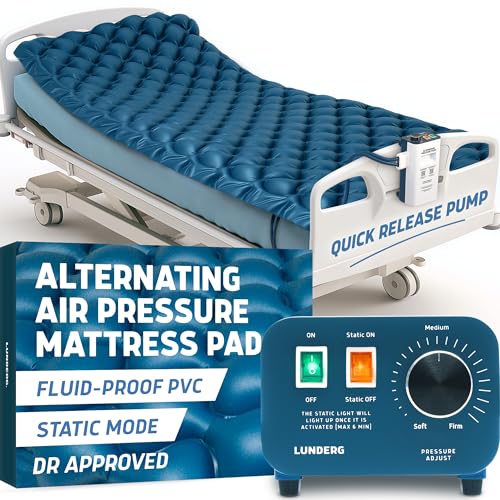
Best for: users who want an optional Static Mode for a stable surface during rest. This model supports long-term bedbound care and includes a quiet pump with soft-to-firm control, enabling quick adjustments without constant alternation.
Why selected: It offers a quiet operation (approx. 23 dBA), precise control, and a 300 lb weight capacity, making it suitable for home or hospital settings.
Caution: If alternating therapy is not needed, Static Mode provides a stable surface that may feel different from continuous cycling.
MedVance Premium Alternating Pad

Best for: facilities or homes needing a hospital-grade feel with quiet operation and alarms. This model uses a dual-core pump and a digital control panel for clear adjustments and monitoring.
Why selected: The ultra-quiet pump and digital alarms support safe use in care settings while the six-minute cycle promotes even weight distribution and improved circulation.
Caution: The digital unit includes alarms; ensure familiarity with the panel to respond quickly if alarms sound.
Lunderg PressuRelief Alternating Pad

Best for: users who need added comfort with a familiar feel. The included PressuRelief Comfort Layer softens the surface, while still delivering effective pressure relief through gentle wave therapy.
Why selected: Static Mode remains available, and the pump operates quietly at about 23 dBA, enabling comfortable sleep without disruption.
Caution: The comfort layer adds softness; ensure compatibility with patient preferences for support level and mattress height.
Kekoy Alternating Pad With Quiet Pump

Best for: extended bed rest with enhanced airflow and comfort. Kekoy combines alternating therapy with low air loss for cooler, drier skin and smoother transitions.
Why selected: It emphasizes wide comfort with a durable build and supports up to 300 lbs, making it a practical option for home care or facilities.
Caution: Prospective buyers should verify fit for specific bed dimensions since oversized or undersized pads may affect coverage and efficacy.
Buying Guide: Key Considerations for Choosing a Pressure Relieving Mattress Pad
- Intended environment: Home care vs. hospital settings influence pump noise, durability, and control complexity.
- Pressure redistribution technology: Look for alternating cycles, number of cells, and airflow features. More cells can offer finer pressure distribution.
- Pump characteristics: Ultra-quiet operation, number of pressure levels, and presence of Static Mode affect comfort and sleep quality.
- Weight capacity and dimensions: Confirm compatibility with the user and bed frame height; higher capacities support heavier patients.
- Waterproof and easy-to-clean surfaces: Important for hygiene and easy maintenance, especially in long-term care.
- Alerts and monitoring: Digital panels, alarms, and remote control simplify use for caregivers and patients alike.
Frequently Asked Questions
- What is alternating pressure therapy? It cycles air in and out of cells to relieve pressure on vulnerable areas and improve circulation.
- What is Static Mode? Static Mode keeps all cells inflated at a stable level, reducing movement for some patients.
- Is a waterproof cover important? Yes, waterproof surfaces help prevent moisture buildup and simplify cleaning, which reduces infection risk.
- Who benefits most from these pads? Bedridden or limited-mobility individuals at risk of pressure ulcers, and caregivers seeking easier maintenance.
- How quiet should a pump be? A pump around 20–23 dBA is considered whisper-quiet and suitable for sleep-friendly environments.
- Do these pads require professional setup? Some models are straightforward to set up, while others may benefit from caregiver guidance or medical supervision.