Best Pressure Relief Air Mattress Options for Bed Sore Prevention and Comfort
If you’re seeking reliable pressure relief for bedridden or limited-mobility users, these pressure relief air mattresses provide alternating or low‑air‑loss support to reduce pressure points, improve circulation, and promote better sleep. This guide highlights five top picks suited for home care, hospitals, or long-term care settings, with practical notes on who each product is best for and potential limitations.
| Product | Best For | Key Benefit |
|---|---|---|
| Vive Alternating Air Pressure Mattress Pad | Caregivers of bedridden patients needing adjustable therapy | 130 air cells with quiet pump |
| MedVance Low Air Loss Mattress Replacement System | Long-term care and home use needing robust alarms | Digital control with alarms, fast setup |
| Lunderg Alternating Air Pressure Mattress Pad | Hospitals or home care seeking static and alternating modes | Quiet pump, static mode option |
| Vaunn Medical Cloud Air Whisper Quiet Topper | Extended bed rest with a focus on circulation | Wave therapy with 130 cells |
| MedVance Premium Alternating Mattress Pad | Care facilities needing ultra-quiet operation | Ultra quiet pump, alternating relief |
Vive Alternating Air Pressure Mattress Pad
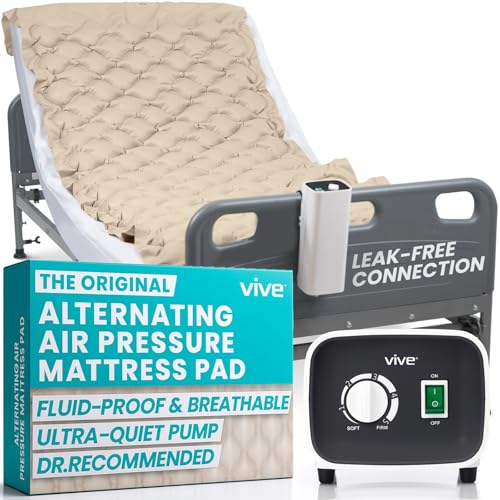
The Vive mattress pad uses a 130‑cell system to alternately inflate and deflate, creating a wave-like surface that distributes weight and reduces pressure spots. The design aims to relieve bed sores and ulcers for immobilized users and helps caregivers by providing a more manageable care surface. The included whisper‑quiet pump runs at about 22 dBA, enabling restful sleep and continuous airflow with multiple pressure levels for customization. Best for caregivers seeking an easy-to-use, low-noise solution with adjustable pressure cycles. Caution: operation relies on consistent power to maintain therapy; intermittent outages may interrupt cycles.
MedVance Low Air Loss Mattress Replacement System

This system features an ultra‑quiet hospital‑grade pump with a digital screen for weight and pressure readouts, plus diagnostic alarms for easy monitoring. The 8″ deep air cells are designed to prevent bottoming out and provide up to 24 hours of power‑outage protection with a pillow function at the head. Best for users who need precise digital control and reliability in long‑term care settings. Limitation: the system’s complexity may require some setup time and familiarity with digital controls.
Lunderg Alternating Air Pressure Mattress Pad
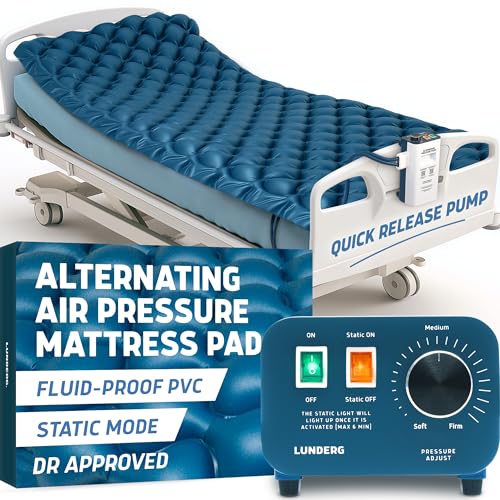
Lunderg combines doctor‑recommended design with a quiet 23 dBA pump and a static mode option, allowing a smooth transition from alternating therapy to a stable sleeping surface. It supports hospital bed setups or home mattresses and handles up to 300 lbs, which makes it a versatile option for long‑term care. Choose this if you want a straightforward switch between modes and a strong weight capacity. Caution: static mode reduces the dynamic relief cycle while engaged, so overflow pressure relief is limited in that mode.
Vaunn Medical Cloud Air Whisper Quiet Topper

The Vaunn topper emphasizes doctor‑recommended relief for ulcers and bed sores with its air‑lift technology that keeps constant airflow to distribute circulation. The 130‑cell system provides gentle wave therapy to relax muscles and maintain a cooler sleep surface. Best for users who need ongoing relief with a focus on skin health and a calmer sleep environment. Limitation: may require compatible bed frames and positioning aids to achieve optimal coverage on smaller beds.
MedVance Premium Alternating Mattress Pad

This premium pad offers an ultra‑quiet digital pump and an alternating relief system designed to evenly redistribute weight every six minutes. It targets bed sore prevention and recovery for long‑term care, making it suitable for facilities seeking a high‑reliability topper for bedridden patients. Best when consistent cycling and quiet operation are priorities. Caution: digital features require power and may need periodic maintenance.
Buying Guide: Key Considerations For Pressure Relief Mattresses
What level of care needs does the user have? For temporary or home use, a quieter pump and simpler controls may be preferable. For long‑term care, look for reliable alarms, durable cell design, and a higher weight capacity. Consider bed size compatibility, especially for hospital beds versus standard home beds, and ensure the topper or mattress pad matches the bed dimensions.
Choosing the Right Technology
- Alternating pressure therapy distributes weight across many cells, reducing pressure buildup in target areas.
- Low air loss systems provide continuous airflow to keep the skin drier and cooler, which helps prevent moisture-related issues.
- Static mode can offer a stable surface when needed, but may reduce dynamic relief.
Noise, Power, and Controls
- Ultra‑quiet pumps minimize sleep disruption; check decibel ratings if noise sensitivity is a concern.
- Digital controls with alarms help caregivers monitor pressure and wake‑up events, especially in facilities.
- Look for easy inflation/deflation cycles that align with care routines (commonly 6–12 minutes per cycle).
Durability and Maintenance
- Cell construction and heat sealing prevent leaks and extend lifespan in high-use environments.
- Waterproof covers help protect against incontinence and spills; check for easy cleaning features.
- Replacement parts availability, such as pumps and bladders, supports long‑term reliability.
Weight Capacity and Compatibility
- Confirm the user’s weight and bed frame compatibility, especially for hospital or home care setups.
- Higher weight ratings provide more flexibility for diverse patients without compromising performance.
Frequently Asked Questions
- What is the main difference between alternating pressure and low air loss mattresses?
- Who should consider a static mode option?
- Do these products require professional installation?
- How important is an alarm feature?
- Are ultraQuiet pumps essential?
- Can these toppers prevent bed sores effectively?
Alternating pressure redistributes weight by inflating and deflating cells, while low air loss maintains continuous airflow to keep the surface cooler and drier.
Static mode is useful when a caregiver needs a stable sleeping surface without ongoing cell cycling.
Many are designed for easy setup with standard bed frames, but hospitals or complex care settings may require assistance.
Alarms help monitor pressure stability and detect pump or system issues, enhancing safety in care environments.
Quiet pumps improve sleep quality for users and reduce caregiver disruption during nighttime care.
They reduce pressure buildup and improve circulation, which helps prevent ulcers when used as part of a comprehensive care plan.