Best Pressure Point Mattress for Hospital Beds: Top Picks for Relief
If you’re shopping for a pressure point mattress for a hospital bed, you want a surface designed to relieve sores, improve circulation, and adapt to different care needs. The top options below are best for bedridden individuals who need ongoing pressure redistribution, whether at home or in a facility. This guide highlights who each product is best for, plus practical considerations to help you compare quickly.
| Product | Best For |
|---|---|
| Vive Alternating Air Pressure Mattress Pad | Best for continuous relief with a whisper-quiet pump |
| Lunderg Alternating Air Pressure Mattress Pad with Static Mode | Best for users needing both dynamic relief and a stable surface |
| Vaunn Medical Cloud Air Whisper Quiet Mattress Topper | Best for steady airflow and easy installation |
| Kekoy Alternating Air Pressure Mattress Pad | Best for early-stage pressure sore prevention |
| Careboda Alternating Air Pressure Mattress Pad | Best for quiet operation and adjustable levels |
Vive Alternating Air Pressure Mattress Pad
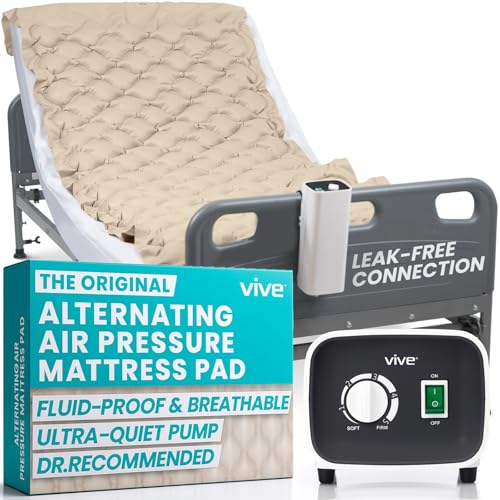
Best for: bedridden individuals who require continuous pressure redistribution and ultra-quiet operation. The pad uses a 130-cell system with a drift-free, heat-sealed design to prevent leaks and distribute weight evenly. Ideal for patients who cannot shift themselves frequently, helping manage skin maceration and promote circulation.
Why selected: Its 130 air cells, wave-like therapy, and whisper-quiet pump provide consistent relief and a durable surface for long-term use. The 6-minute cycle strikes a balance between effectiveness and comfort. A potential limitation is the dependency on the pump’s electrical supply for full functionality.
Caution: The system relies on the pump for alternating cycles; ensure access to a power source and consider backup options in case of outages.
Lunderg Alternating Air Pressure Mattress Pad with Static Mode
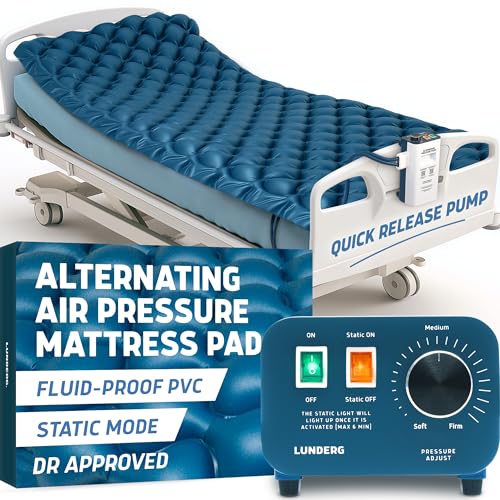
Best for: users who benefit from both pressure-redistribution and the option of a static, fully inflated surface for steady rest. The unit includes a quiet pump with a static mode and a quick connector, supporting up to 300 lbs, making it suitable for home or hospital bed use.
Why selected: It offers a flexible care approach—alternate therapy for soreness, plus a non-changing surface when needed. The static mode helps caregivers give patients a predictable surface during rest periods. Limitation: The product relies on accurate setup to maintain even cell inflation during static mode.
Caution: Static mode reduces pressure redistribution effectiveness; use it in line with care plan requirements for comfort and skin health.
Vaunn Medical Cloud Air Whisper Quiet Mattress Topper

Best for: individuals on extended bed rest who need reliable ulcer relief with quiet operation. The 130-cell wave therapy distributes airflow to relieve pressure and promote circulation, providing a cool sleeping surface.
Why selected: The air-lift and wave therapy design offers smooth, even pressure distribution and consistent airflow. A potential limitation is that outcome effectiveness depends on proper placement and full bed coverage to avoid pressure gaps.
Caution: Verify bed compatibility, as some hospital beds may require a different topper size or mounting approach for full coverage.
Kekoy Alternating Air Pressure Mattress Pad

Best for: caregivers seeking 130 air cells for continuous redistribution with a waterproof cover. The system supports bedridden users and those in early-stage risk for pressure sores.
Why selected: It emphasizes 130 bubble cells with 6-minute cycle timing, providing steady pressure relief. It’s especially helpful for early prevention and daily care routines. Limitation: Some users may prefer a higher number of cells for specific body shapes and larger individuals.
Caution: Ensure the pad size matches the patient bed dimensions to prevent fit issues and coverage gaps.
Careboda Alternating Air Pressure Mattress Pad
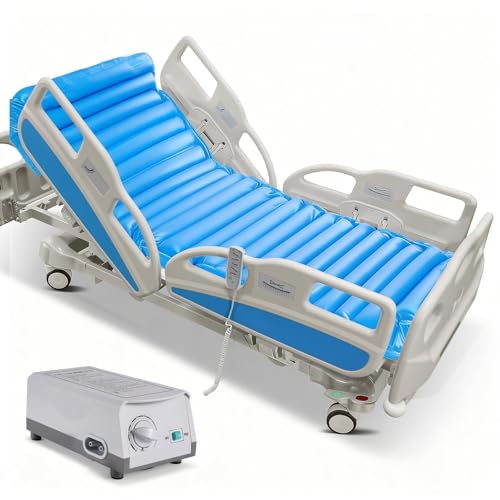
Best for: home and hospital settings where quiet operation and easy installation are priorities. Features include a waterproof mattress topper and a 10-level adjustable pump for customization.
Why selected: The combination of quiet operation (<40 dB), 10 pressure levels, and a user-friendly install makes it a versatile option for care environments with varying needs. Caution: The effective performance depends on proper sealing and bed frame compatibility to prevent air leaks.
Buying Guide: Key Considerations For Choosing A Pressure Point Mattress
- Bed compatibility: Check mattress dimensions, bed frame type, and whether the topper needs a flat surface to function correctly.
- Cell count and coverage: More cells can provide finer pressure distribution; ensure the pad covers the entire user surface to minimize pressure hotspots.
- Pump noise and reliability: Ultra-quiet pumps reduce sleep disturbances; verify power source requirements and availability of backup options if needed.
- Static mode vs. alternating therapy: Static mode provides a stable surface; alternating therapy offers continuous redistribution—use based on care plan and skin health status.
- Waterproof and cleaning: Waterproof covers simplify hygiene; confirm cleaning instructions and material durability for long-term use.
- Weight capacity: Ensure the product supports the user’s weight and complies with bed or frame specifications.
- Ease of installation: Look for simple hookup, clear instructions, and mounting options to fit home or facility environments.
- Maintenance needs: Consider pump life, cell seals, and replacement parts availability for ongoing care.
Frequently Asked Questions
- What is a pressure point mattress used for?
It redistributes body weight to relieve pressure on vulnerable areas, helping prevent bed sores and promoting circulation for bedridden individuals.
- How does alternating air therapy help?
Alternating inflation and deflation move pressure across the body, reducing continuous stress on any single area and aiding skin health over time.
- What should I consider when choosing size?
Measure the bed and user dimensions to ensure full coverage. A pad that’s too small can create pressure gaps and defeat its purpose.
- Is a static mode necessary?
Static mode offers a stable surface for rest or care routines when continuous redistribution is not required or desired.
- Are waterproof covers important?
Yes. Waterproof covers help protect the mattress from fluids and ease cleaning, supporting skin care and infection control.
- Can these toppers be used on home beds and hospital beds?
Most models are designed for hospital beds or home hospital-style setups; always verify bed compatibility and installation guidelines before purchasing.