Best Mattress Pads for Bed Sores and Pressure Ulcers: Comfort, Prevention and Recovery
When choosing a mattress pad for bed sores, you want reliable pressure relief, quiet operation, and durable materials. This guide highlights five top options designed to help bedridden or limited-mobility individuals reduce pressure, improve circulation, and stay comfortable. Ideal buyers include caregivers seeking hospital-grade support, families caring for chronic bed bound patients, and facilities needing long-term care solutions. The table below compares the top picks at a glance.
| Product | Best For | Key Benefit | Notes |
|---|---|---|---|
| Vive Alternating Air Pressure Mattress Pad | Bedridden individuals needing continuous pressure relief | 130 air cells, whisper-quiet pump | Well-rounded solution with durable construction |
| Lunderg Alternating Air Pressure Mattress Pad (Static Mode) | Caregivers seeking flexibility | Static mode option for stable surface | Quiet operation; supports home and hospital use |
| MedVance Premium Alternating Air Pressure Mattress Pad | Hospitals and homes needing ultra-quiet, reliable relief | Ultra-quiet digital pump with alarms | Solid pressure redistribution every 6 minutes |
| Kekoy Alternating Air Pressure Mattress Pad (130 Cells) | Active prevention with heat and moisture control | 130 bubble cells; waterproof cover | Designed for long-term care and home use |
| Lunderg Queen Size Alternating Mattress Pad (Static Mode) | Queen-sized beds and larger | Static mode plus quiet pump | Large surface area; ideal for bigger patients |
Vive Alternating Air Pressure Mattress Pad
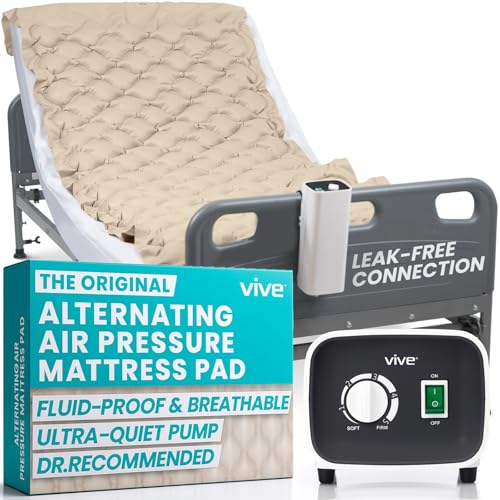
This pad uses an advanced wave-like therapy with 130 air cells that alternately inflate and deflate, distributing weight to relieve pressure spots. It includes a whisper-quiet pump operating at about 22 dBA and multiple pressure levels for a customizable experience. It is best for bedridden patients who need continuous relief and improved skin integrity due to pressure distribution. A potential limitation is the need for regular maintenance to ensure seal integrity across the 130 cells.
- Best for users who require constant pressure redistribution.
- Quiet pump helps for uninterrupted sleep.
- Durable 130-cell system minimizes localized pressure.
Lunderg Alternating Air Pressure Mattress Pad with Static Mode
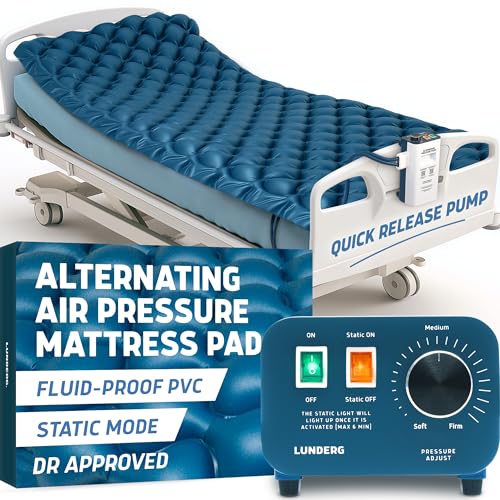
This model combines alternating pressure therapy with a static mode, providing a stable surface when needed. It’s whisper-quiet at 23 dBA and offers precise soft-to-firm control. Suitable for hospital beds or home use, it supports up to 300 lbs. Best for caregivers who want a flexible setup and the option to switch to a non-alternating mode during rest periods. A limitation is that switching modes may require occasional reattachment of hoses or connectors.
- Best for caregivers needing mode flexibility.
- Static mode provides a reliable resting surface.
- High weight capacity supports larger patients.
MedVance Premium Alternating Air Pressure Mattress Pad

This mattress pad emphasizes ultra-quiet operation with a hospital-grade digital pump and dual cores for steady airflow. The control panel includes alarms, making it suitable for home or facility care. It automatically cycles every six minutes to redistribute weight and improve circulation, a key factor in bed sore prevention. Best for environments requiring predictable, low-noise performance. A caution is that some users may prefer a broader range of cycle times for various care needs.
- Best for quiet, controlled relief in care settings.
- Alarms help monitor adjustments and safety.
- Consistent cycle promotes skin health over time.
Kekoy Alternating Air Pressure Mattress Pad (130 Cells)

Designed for early-stage pressure care, this Kekoy pad uses 130 bubble air cells to redistribute weight across the body. It also includes a waterproof cover and a whisper-quiet pump. Best for elderly care or home use where preventing red marks is a priority. A potential limitation is that larger individuals may require larger surface models for optimal coverage.
- Best for early prevention and skin integrity support.
- Waterproof cover aids longevity and cleanliness.
- 130-cell system ensures even pressure distribution.
Kekoy Bed Sore Prevention Mattress Pad (75″ x 36″)

This Kekoy model targets home use with a 75″ x 36″ footprint and a whisper-quiet pump. It focuses on alternating pressure with a waterproof heat-resistant ulcer cushion pad to support at-risk areas. Best for smaller beds or rooms where a compact pad is needed. A limit is that surface area may be less suitable for larger beds, possibly requiring a larger model for full coverage.
- Best for compact spaces or smaller beds.
- Includes waterproof cushion for added protection.
- 130-cell system supports effective redistribution.
Buying Guide: Key Purchase Considerations
Pressure relief technology varies across mattress pads. When selecting a model for bed sores, consider the following:
- Pressure redistribution method: Alternating pressure (pulses across cells) vs. static mode (all cells stable). Choose alternating pressure for ongoing relief or static mode for steady support during rest.
- Cell count and coverage: More cells (e.g., 130) diffuse pressure better but may require sturdier pumps and maintenance. Ensure the pad covers the intended bed area.
- Noise level: Quiet pumps (approx. 22–23 dBA) improve sleep and adherence to use, especially in home settings or overnight care.
- Pump reliability and controls: Digital panels and alarms can aid caregivers in monitoring treatment and adjustments.
- Cover materials: Waterproof or water-resistant covers protect against moisture and skin exposure; check for fabric breathability to reduce heat buildup.
- Weight capacity: Match the pad to the patient’s weight and bed size for safe support and optimal function.
- Durability and maintenance: Look for heat-sealed air cells and easy-to-clean surfaces. Regular inspection reduces leakage risk.
- Intended setting: Hospital beds vs. home use; consider portability, setup, and caregiver availability.
Frequently Asked Questions
- What is an alternating air pressure mattress pad?
Answer: It uses a system of air cells that periodically inflate and deflate to redistribute pressure and reduce skin breakdown. - Who should use these pads?
Answer: Bedridden or limited-mobility individuals at risk of pressure ulcers, and caregivers seeking prevention or recovery support. - Do these pads require special maintenance?
Answer: Yes, regular inspection of seals and covers helps prevent leaks, and some models offer alarms for monitoring. - What size should I choose?
Answer: Match the mattress pad size to the bed and patient, ensuring full coverage of high-pressure areas such as hips, back, and shoulders. - Are static mode options beneficial?
Answer: Static mode provides a stable surface for rest and is useful when alternating therapy is not desired for extended periods. - Can I use these pads at home?
Answer: Many models are designed for home use and hospital beds, with quiet pumps and simple controls for everyday care.