Best Mattress Overlays for Bed Sores
Finding the right mattress overlay is essential for preventing and managing bed sores in bedridden or immobilized individuals. This guide highlights five top options that balance pressure relief, breathability, and quiet operation. Best for caregivers seeking reliable, hospital-grade support at home, these overlays help redistribute weight, reduce friction, and improve comfort during long rests. Each product below includes who it’s best for, plus clear pros and a practical limitation to consider.
| Product | Best For | |
|---|---|---|
| Vive Alternating Air Pressure Mattress Pad | Bedridden patients needing consistent pressure redistribution | 130 cells with a whisper-quiet pump for customizable cycles |
| Lunderg Alternating Air Pressure Mattress Pad (Static Mode) | Users who occasionally need a static surface | Quiet operation plus a static mode for stability |
| Kekoy 130-Cell Mattress Pad | Long-term care at home or in facilities | 130 bubble cells for continuous pressure redistribution |
| Kekoy 75″ x 36″ Mattress Pad (Blue) | Elderly care with stage 1–2 risk | Dual-mode therapy with low air loss and wide coverage |
| MedVance Premium Alternating Pad | Care facilities or homes needing ultra-quiet operation | Ultra-quiet pump and hospital-grade pressure relief |
Vive Alternating Air Pressure Mattress Pad
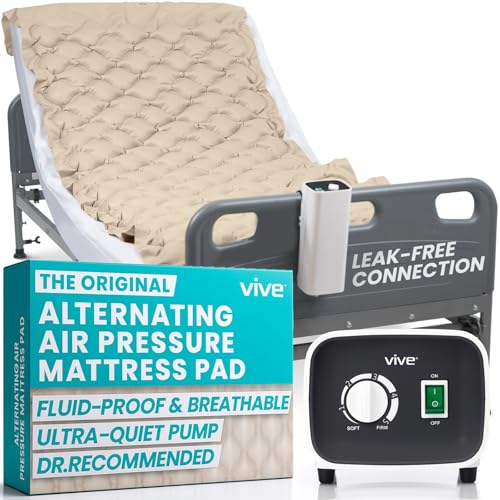
Best for bedridden users who cannot shift weight frequently. The pad uses 130 air cells with an alternating cycle to evenly distribute weight and relieve pressure spots, promoting better skin health and comfort. The whisper-quiet pump operates at about 22 dBA, offering customizable pressure levels and cycles that last around six minutes. Suitable for home care and hospital-style settings where quiet operation matters. A potential limitation is the need for proper fitting and compatibility with existing toppers or bed frames.
Lunderg Alternating Air Pressure Mattress Pad (Static Mode)
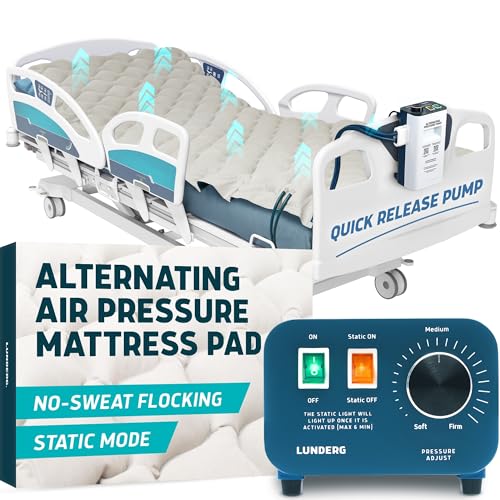
Best for caregivers who value both alternating relief and a static option. Lunderg’s unit features a whisper-quiet pump at about 23 dBA and a static mode that keeps all cells inflated for a stable surface. The flocking technology provides a softer, breathable feel compared with vinyl overlays, reducing heat buildup. Limitation: static mode stops the pressure relief cycle, so it’s not ideal for ongoing relief if you rely on continuous motion therapy.
Kekoy 130 Bubble Air Cells Mattress Pad

Best for ongoing bed sore prevention with even pressure distribution. Kekoy’s 130 bubble air cells alternate to redistribute body weight and reduce pressure concentration on hips, back, shoulders, and heels. The product emphasizes continuous airflow and a waterproof, durable surface. Caution: details about pump noise levels are not provided; users sensitive to sound should verify pump spec before purchase.
Kekoy 75″ x 36″ Mattress Pad (Blue)

Best for elderly care with a focus on early-stage pressure sore prevention. This model combines alternating pressure with low air loss technology and a waterproof, heat-resistant cover. Coverage is broad enough for common bed sizes and can be advantageous for home care or hospital use. Limitation: some users may require separate air pump compatibility checks to ensure the system integrates with existing hospital bed setups.
MedVance Premium Alternating Pad

Best for care facilities or home care requiring ultra-quiet operation and consistent pressure relief. MedVance features a hospital-grade, ultra-quiet pump and a controlled alternating cycle every six minutes for even distribution of weight. It’s suitable for long-term use and sleep-friendly environments. A potential caveat is the need for routine maintenance of the electronic control panel and alarm system to ensure ongoing reliability.
Buying Guide
What to consider when choosing a mattress overlay
Pressure distribution: Look for devices with multiple cells (130 cells or more) and regular alternation cycles to evenly spread weight and prevent pressure ulcers.
Noise level: A quieter pump (≤23 dBA) reduces sleep disturbance, important for long nights of care.
Mode options: Static mode can be useful for periods of rest or when relief cycles aren’t needed; alternation is essential for ongoing prevention.
Surface feel: Flocking or fabric-like surfaces improve comfort and reduce sweating compared to vinyl overlays.
Durability and compatibility: Ensure the pad is compatible with your bed frame or hospital bed and inspect drainage, covers, and heat resistance for long-term use.
Maintenance: Consider ease of cleaning, waterproof covers, and patch kits for quick repairs.
How to use and maintain for best results
Place the overlay on a clean, firm mattress and secure with straps or fittings if provided. Run the pump on a moderate cycle to begin, then adjust based on comfort and skin assessment. Inspect skin daily, especially over bony areas, and reposition as needed to complement the relief therapy.
Common questions buyers ask
- Which overlay is best for home care? The Vive, Lunderg, and Kekoy options are designed for home care environments with varying modes and noise levels.
- Do all overlays require a separate pump? Replacement pads like the Vive pad may need an accompanying pump; always verify system compatibility.
- Can these systems help with stage 1–2 pressure sores? Yes, most models target redistribution in high-risk areas to prevent progression.
- Is a static mode enough for ongoing care? Static mode offers stability but generally lacks continuous pressure redistribution; use as needed.
- How important is noise level? Critical for sleep quality; aim for pumps around 22–23 dBA or quieter.
- What maintenance is required? Regular cleaning, checking for leaks, patch kits, and ensuring the controller is functioning properly.
Quick comparison at a glance
- Best overall pressure relief: Vive Alternating Air Pressure Mattress Pad
- Best option with static mode: Lunderg Alternating Air Pressure Mattress Pad
- Best long-term home care: Kekoy 130 Bubble Air Cells Mattress Pad
- Best for elderly care with dual modes: Kekoy 75″ x 36″ Mattress Pad Blue
- Best for ultra-quiet operation: MedVance Premium Alternating Pad
FAQ
- What is an alternating air pressure mattress pad? It uses a series of cells that inflate and deflate to redistribute weight and reduce constant pressure on vulnerable areas.
- Who benefits most from these overlays? Bedridden or immobilized individuals at risk for bed sores, and caregivers seeking safer, easier-to-manage comfort solutions.
- Are these overlays safe for long-term use? They are designed for extended use in home and clinical settings, but follow product instructions and skin checks to prevent irritation.
- What should I check before buying? Cell count, pump noise level, mode options, waterproofing, and compatibility with your bed setup.
- Do these products replace repositioning? No, they assist in pressure relief but should be used with regular turning and skin assessments.