Best Mattress Solutions for Paralyzed Patients
If you’re looking for a mattress solution to reduce pressure sores for a paralyzed or bedridden patient, alternating air pressure mattresses are usually the most effective option. These systems redistribute weight, promote better circulation, and help keep skin dry. This guide reviews five top choices, highlighting who each is best for, plus practical pros and limitations.
Summary Table of Selected Products
| Product | Best For | Key Benefit |
|---|---|---|
| Vive Alternating Air Pressure Mattress Pad | General bedridden patients needing continuous pressure relief | 130-air-cell system with whisper-quiet pump |
| Removable Alternating Pressure Mattress (Generic) | Budget-conscious caregivers seeking basic relief | 3 adjustable pressure levels |
| Kekoy Alternating Air Pressure Mattress Pad | Early-stage pressure sore prevention | 130 air cells with waterproof cover |
| QCYHDF Alternating Air Pressure Mattress (Blue) | In-home or facility use with quiet operation | Ultra-quiet pump and easy setup |
| 2 Pack Inflatable Seat Cushions (LJZP) | Supplementary seating for pressure relief | Portable comfort with fixed-position keeps seats steady |
Notes: These products target bedridden or paralyzed patients who cannot shift their weight regularly. The selections emphasize continuous pressure redistribution, durability, and ease of use in home or care settings.
Vive Alternating Air Pressure Mattress Pad
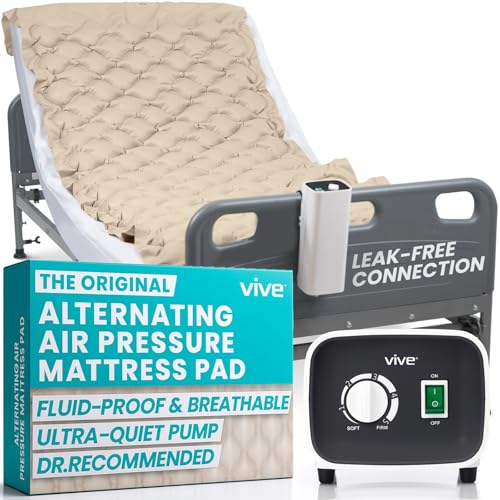
The Vive mattress pad uses a 130-air-cell system and a whisper-quiet pump to deliver wave-like therapy that alternately inflates and deflates each air cell. This design aims to evenly distribute weight and relieve pressure at vulnerable sites, supporting immobilized users who struggle with weight shifting. The pump operates at about 22 dBA, making it suitable for quiet sleep and rest. Best for caregivers seeking a doctor-recommended relief option with strong durability.
- Best for: bedridden or immobilized patients needing reliable pressure redistribution.
- Why selected: high cell count and proven alternating therapy help reduce pressure points quickly.
- Caution: ongoing setup and maintenance of the pump are required; ensure compatibility with the bed frame.
Removable Alternating Pressure Mattress (Paralyzed Patient Turning)

This option emphasizes adjustability with three pressure levels and a silent air pump. It aims to improve blood circulation and skin integrity by distributing weight uniformly. The removable design facilitates cleaning and maintenance, which is practical in home care environments. Best for caregivers who want a balance of cost and functionality for long-term use.
- Best for: caregivers needing adjustable pressure levels and easy cleaning.
- Why selected: reliable 130 bubble cell architecture supports consistent pressure redistribution.
- Caution: check the fit for your bed size and frame before purchase.
Kekoy Alternating Air Pressure Mattress Pad

The Kekoy pad includes 130 air cells, a waterproof cover, and an adjustable whisper-quiet pump. It emphasizes early-stage prevention with a focus on redistribution in common pressure areas like hips and shoulders. The waterproof cover supports easier cleaning and hygiene. Best for patients in early risk stages and caregivers prioritizing moisture control.
- Best for: early prevention of pressure sores during extended bed rest.
- Why selected: waterproof cover and well-sealed cells minimize leakage and maintain comfort.
- Caution: ensure shell integrity and bed compatibility to avoid leaks or misfit.
Alternating Air Pressure Mattress (Blue)

This model is designed for long-term care settings, offering a quiet variable-pressure pump and a 130-cell array for effective pressure redistribution. It is marketed toward families and nursing homes, with easy setup and portable design that fits most beds. Best for home-care use when a balance of quiet operation and simple installation is needed.
- Best for: families and nursing homes seeking a straightforward, quiet solution.
- Why selected: broad applicability and simple setup support consistent use in daily care.
- Caution: verify bed frame compatibility and ensure adequate space for the pump connections.
2 Pack Inflatable Seat Cushions (LJZP)

These inflatable cushions provide added seating comfort and help prevent shifts when a patient depends on chairs, wheelchairs, or shower chairs. They are portable and come with a pump for easy inflation. Best for supplementary pressure relief during seating positions and for caregivers who need mobility-friendly options. Caution: cushions are not a full mattress replacement and should be used in conjunction with a proper bed system.
- Best for: adding pressure relief during sitting and mobility tasks.
- Why selected: lightweight and portable with an included pump.
- Caution: not a substitute for a full bed-level pressure-relief mattress.
Buying Guide: Key Considerations For Choosing an Alternating Pressure Mattress
What to evaluate before buying: the main goal is consistent pressure redistribution to prevent bedsores and improve comfort. Consider the patient’s mobility, bed size, moisture management needs, and caregiver setup capability.
Bed and Frame Compatibility
Measure bed dimensions and check the mattress dimensions listed by each product. Some pads require specific bed frames or frames with compatible attachment points. If the bed frame is adjustable, verify clearance for the pump and hoses.
Circulation Benefits and Cell Count
Most effective models use a high cell count (often 130) to distribute weight evenly. Higher cell density can lead to more uniform pressure relief, especially for larger patients or those with prominent bony areas.
Noise Level and Sleep Quality
Quiet pumps improve sleep quality and reduce disturbance for caregivers. Look for pumps rated around 20-25 dBA for the best experience in home settings.
Hygiene and Cleaning
Waterproof or wipe-clean covers support hygiene, especially for incontinent patients. Removable covers simplify cleaning and maintenance, extending the product’s usable life.
Maintenance And Durability
Heat-sealed air cells prevent leaks. Consider models with durable seams and simple repair options. Regular inspection of cords, connectors, and the pump can prevent malfunctions.
Cost vs. Benefit
Balancing upfront cost with long-term care needs is essential. A higher upfront price may reflect better durability, longer pump life, and fewer caregiver adjustments over time.
Frequently Asked Questions
- What is an alternating pressure mattress and why is it used for paralyzed patients?
It alternates air pressure across multiple cells to redistribute body weight, reduce pressure points, and improve skin health in immobile patients.
- How do I choose the right cell count for a caregiver’s needs?
A higher cell count offers more uniform coverage; 130-cell systems are common and effective for most users.
- Are these mattresses suitable for home use?
Yes, many models are designed for home care, with compact pumps and straightforward setup.
- What maintenance is required for these mattresses?
Regular cleaning of covers, inspection of seams, and ensuring the pump remains free of obstructions are typical maintenance steps.
- Can these mattresses be used with existing bed frames?
Most can be adapted to standard bed frames, but verify dimensions and attachment compatibility beforehand.
- Do these devices help with prevention or treatment of bedsores?
They primarily help prevent bedsores by reducing constant pressure; some models may support skin relief for early-stage sores.