Best Low Pressure Air Mattress Options for Comfort and Prevention
For caregivers and patients seeking reliable relief from pressure ulcers and bed sores, a low pressure air mattress provides even support, adjustable firmness, and quiet operation. This guide highlights five proven options, describing who they’re best for, what makes them stand out, and practical considerations. Each product is evaluated for use at home or in care facilities, with a focus on pressure redistribution, durability, and ease of use.
| Product | Main Benefit | Best For |
|---|---|---|
| MedVance Low Air Loss Mattress System | Ultra-quiet pump with digital alarms and quick deflation | Caregivers seeking precise control for distinct patient needs |
| Vive Alternating Air Pressure Mattress Pad | 130 cell array with whisper-quiet operation | Users needing extensive pressure distribution and gentle cycles |
| Drive Medical Med-Aire Low Air Loss System | 20 replaceable bladders and pillow feature | Longer-term use with robust cell structure |
| Vive 8″ Alternating Pressure Mattress | 16 air chambers with static head pillow option | Bedridden patients requiring adjustable comfort and portability |
| ProHeal Low Air Loss Alternating Mattress | Four customizable pressure cycles and cell-on-cell design | Therapy-focused care with customizable therapy durations |
Note: All products support low air loss and alternating pressure, designed to minimize shear, reduce moisture buildup, and improve patient comfort. This article is structured to help buyers compare key attributes quickly and make informed decisions.
MedVance Low Air Loss Mattress System

The MedVance system uses a dual-core, ultra-quiet pump (<20 dB) with a digital LED screen and diagnostic alarms. It features an 8-inch cell depth with a cell-on-cell design to prevent bottoming out and provides up to 24 hours of power outage protection. A head pillow function and a quick-deflate emergency CPR tag add practical safety for caregivers. Best for: caregivers who need precise patient-specific adjustments and quick deflation on demand. Limitation: the system’s alarm diagnostics depend on accurate setup and may require familiarization for new users.
Vive Alternating Air Mattress Pad
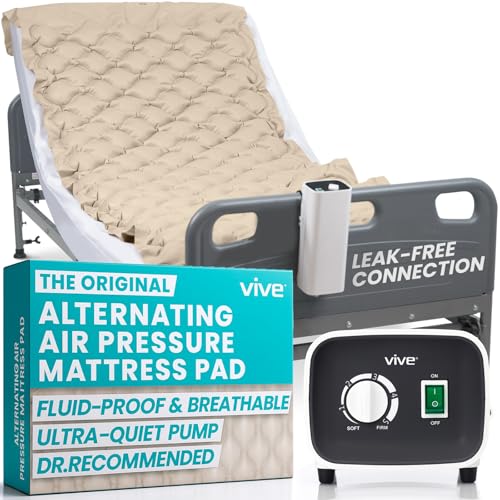
The Vive pad uses 130 air cells with an advanced wave-like therapy that alternates to relieve pressure spots. The whisper-quiet pump operates at about 22 dBA and offers multiple pressure levels for a fully customizable experience. Best for: those needing broad-area pressure relief and a gentle cycling profile. Limitation: higher cell count may require careful maintenance to prevent leaks in the seals over time.
Drive Medical Med-Aire Low Air Loss System

This Drive Medical system combines pressure relief with a robust 20-bladder architecture and a built-in pillow feature for head stability. It uses a vapor-permeable cover to help manage moisture and friction. Best for: users needing a durable, hospital-grade option with strong immersion capabilities. Caution: moisture management features require routine cover maintenance to maintain performance.
Vive 8″ Alternating Pressure Mattress

The Vive 8″ model features 16 air chambers with a static head-pillow function and a variable pressure pump. It’s ultralight and easy to reposition, making it suitable for home care where mobility and setup ease are priorities. Best for: home caregivers seeking a portable, adjustable option. Limitation: static pillow mode lowers pressure relief in certain configurations; users may rely more on the alternating cycles for full relief.
ProHeal Low Air Loss Alternating Mattress

ProHeal’s mattress uses a 20-bladder system with four customizable therapy cycles (10, 15, 20, 25 minutes). The cell-on-cell design helps retain air during power outages, and 18 laser-size ventilation holes manage moisture. Best for: patients requiring adaptable therapy durations and strong moisture management. Caution: user familiarity with cycle timing improves results; misconfiguration may reduce effectiveness of therapy.
Buying Guide: Key Considerations For Choosing A Low Air Loss Mattress
- Intended environment: Home care versus facility use may influence durability, cover materials, and pump quietness.
- Cell architecture: Cell-on-cell vs alternating cell arrays affect immersion, stability, and power outage resilience.
- Pump noise and diagnostics: Ultra-quiet pumps reduce sleep disruption; digital alarms help caregivers monitor pressure and detect issues.
- Moisture management: Covers and moisture-wicking materials help prevent moisture buildup and skin-related concerns.
- Head support: Pillow or static head zones can provide additional comfort for patients who lie flat for long periods.
- Portability and setup: Weight, ease of inflation/deflation, and the presence of quick-deflate features affect daily use.
- Maintenance: Look for easy-to-clean covers and seal integrity to minimize leaks and part replacements.
What matters most to buyers
- Pressure redistribution and prevention of pressure ulcers
- Quiet operation to support restful sleep
- Durable construction with effective moisture control
- Clear, actionable alarms and simple digital controls
FAQ
- What is low air loss in a mattress?
Low air loss refers to mattresses that distribute air across multiple cells to reduce pressure points while maintaining a breathable surface to manage moisture and skin health.
- Who should use alternating pressure mattresses?
They are suitable for bedridden patients at risk of ulcers, caregivers guiding long-term care, and facility settings seeking consistent pressure relief cycles.
- Are these mattresses compatible with home care setups?
Yes, most models are designed for home and facility use, with adjustable pumps and portable configurations.
- What maintenance do these require?
Regular cover cleaning, monitoring for leaks, and periodic inspection of seals and connectors help maintain performance.
- What should I consider before buying?
Consider patient mobility, required cycle durations, noise tolerance, and whether a static head pillow mode is important for comfort.
- Do these mattresses require professional installation?
Most models come with straightforward setup and caregiver-friendly controls; professional installation is not typically required.