Best Low Air Loss Mattress With Bolsters for Pressure Relief and Comfort
Answering the search for a reliable low air loss mattress with bolsters, this guide highlights five options that balance pressure redistribution, comfort features, and practical design for home and facility use. Each option targets different needs—from ultra-quiet operation to lateral rotation and bariatric support—so readers can choose based on care level, mobility, and budget. This overview helps caregivers and individuals select a system that best fits long‑term pressure relief goals, skin health, and ease of use.
Summary table of chosen products
| Product | Brand | Best For | Key Benefit |
|---|---|---|---|
| MedVance Low Air Loss Mattress Replacement System | MedVance | Home or facility use, quiet environments | Ultra-quiet pump, emergency CPR deflate |
| Invacare microAIR MA900 | Invacare | High-risk pressure ulcers, lateral rotation | Lateral rotation and adjustable cycle for pressure relief |
| Drive Medical Med Aire Low Air Loss System | Drive Medical | General pressure redistribution with moisture control | 20 replaceable bladders, moisture‑wicking cover |
| Vive 8″ Alternating Pressure Mattress | Vive | Cost-conscious, at‑home use | Dynamic pressure settings, quiet pump |
| Drive Medical LS9500N PreserveTech | Drive Medical | Lateral rotation with low air loss | On‑demand rotation, high side bolsters |
MedVance Low Air Loss Mattress Replacement System

Best for sensitive sleepers and care settings that require quiet operation. The system uses a hospital‑grade pump with an ultra‑quiet output and dual cores for steady performance. It features a low air loss cell design that prevents bottoming out and can maintain head‑end air for comfort in static mode. The digital control with diagnostic alarms helps tailor pressure to individual needs. A quick‑deflate CPR function adds safety in emergencies.
Who it’s best for: caregivers seeking a quiet, reliable mattress with easy digital controls and a fast deflate option for quick access during emergencies. Limitation: the data notes a single‑unit configuration; expansion options may vary by facility.
Why selected
- Ultra‑quiet pump under 20 dB supports restful sleep.
- Cell‑on‑cell design reduces bottoming out for longer comfort.
- Emergency deflate feature offers rapid access in critical moments.
Invacare MicroAIR MA900 Low Air Loss Mattress

Best for higher‑risk users who need both alternating pressure and lateral rotation. The MA900 combines alternating pressure cycles with a Lateral Rotation function, cyclically turning the user to balance pressure distribution. It is designed for individuals at medium to high risk of pressure sores (stages I–IV) and supports targeted relief through adjustable cycles and microclimate management.
Who it’s best for: patients at risk of pressure ulcers requiring frequent turning and skin microclimate control. Caution: service availability and compatibility should be confirmed with care programs before purchase.
Why selected
- Alternating pressure plus lateral rotation for comprehensive relief.
- Targets high‑risk populations with adjustable cycle times.
Drive Medical Med Aire Low Air Loss System

Choose this for balanced pressure redistribution with moisture control. The system utilizes an 8‑inch cell design and a vapor‑permeable cover to minimize heat buildup and moisture. It includes a digital pump with diagnostic alarms and a pillow feature for head stability, supporting steady comfort across different bed positions.
Who it’s best for: caregivers seeking a robust, all‑around mattress replacement with reliable moisture management. Limitation: some users may prefer lighter weight or simpler setups for home use.
Why selected
- 20 replaceable bladders enable customized pressure relief.
- Vapor permeable cover reduces moisture and shear friction.
Vive 8″ Alternating Pressure Mattress

Best for at‑home users seeking cost‑effective pressure relief with adjustable settings. The mattress uses a variable pressure pump and a 16‑chamber arrangement to minimize pressure points. It includes a static head‑end pillow function, providing added comfort during rest. The pump is described as ultra‑quiet, helping maintain a peaceful sleep environment.
Who it’s best for: individuals and caregivers prioritizing affordability without sacrificing essential low‑air‑loss features. Limitation: fewer high‑end features than some medical grade models.
Why selected
- Variable pressure settings to tailor comfort.
- Pillow function at the head area aids comfort in static mode.
Drive Medical LS9500N PreserveTech System
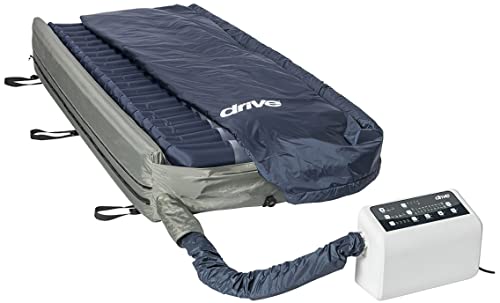
Best for patients needing lateral rotation and on‑demand low air loss. The system includes a 2″ foam base to provide some stability during power outages, plus 10″ high side air bolsters for fall prevention. It offers customizable turn cycles to optimize comfort and skin protection in care settings where rotation is beneficial.
Who it’s best for: users who benefit from turning cycles combined with low air loss. Limitation: higher complexity may require caregiver oversight for optimal programming.
Why selected
- On‑demand turning with adjustable cycles for comfort and pressure distribution.
- High side bolsters add fall prevention during repositioning.
Buying Guide: Key Considerations For Choosing A Low Air Loss Mattress With Bolsters
What matters most for selecting a low air loss system is how well it redistributes pressure, keeps the skin dry, and fits the care environment. Consider the user’s mobility, risk of ulcers, and whether lateral rotation is necessary. Look for quiet operation, ease of use, and maintenance requirements such as replaceable bladders and breathable covers.
How to choose by care setting
- Home use: prioritize lightweight, simple controls, and low maintenance. Price and ease of cleaning are important.
- Facility use: emphasize durability, longer pump life, and extended turning options to manage higher risk patients.
Pressure redistribution and comfort features
- Cell design: 8” or 10” depth affects support and bottoming out prevention.
- Alternating pressure vs. low air loss: alternating cycles help relieve pressure points, while low air loss helps maintain skin microclimate.
- Lateral rotation: choose if patient needs automated turning to reduce prolonged pressure on one side.
Pump performance and safety features
- ULTRA quiet operation supports uninterrupted sleep.
- Digital alarms and CPR deflate options add safety and practicality in urgent situations.
Durability and maintenance
- Cell-on-cell configurations with removable bladders ease cleaning and replacement.
- Moisture management: vapor‑permeable covers and moisture‑wicking materials help reduce skin moisture buildup.
FAQ
- What is a low air loss mattress with bolsters used for? Answer: It redistributes pressure and manages skin moisture to reduce the risk of pressure ulcers for bedfast or limited‑mobility users.
- What should I consider if the user needs frequent turning? Answer: Look for a model with lateral rotation or adjustable turning cycles for comprehensive relief.
- Is a quieter pump important? Answer: Yes, a quieter pump promotes better sleep and less disturbance for the patient and caregiver.
- Are replaceable bladders necessary? Answer: They can extend mattress life and simplify maintenance, especially in high‑use settings.
- What are the advantages of a memory foam layer with the mattress? Answer: A memory foam layer can improve comfort and reduce movement transfer, complementing air‑based pressure redistribution.
- Can these systems be used at home, in clinics, or both? Answer: Most models are suitable for home and facility use, but checking product specifications ensures compatibility with the intended environment.