Best Low Air Loss Mattress Overlays for Pressure Sore Prevention
Direct answer: Low air loss mattress overlays are designed to reduce pressure, improve circulation, and keep skin cooler and drier for bedridden or immobile individuals. This guide highlights top options that balance comfort, reliability, and ease of use for caregivers and patients alike. Best for long-term home care, hospital beds, or facility use, these selections emphasize alternating pressure and low air loss to minimize bed sores.
| Product | Best For | Key Benefit |
|---|---|---|
| Vive Alternating Air Pressure Mattress Pad | Bedridden individuals needing gradual relief from ulcers | 130 air cells with quiet pump and customizable pressure |
| Drive Medical Med-Aire System | Home or facility use needing durable, low-maintenance support | 20 replaceable bladders, adjustable digital pump |
| MedVance Low Air Loss System | Care facilities seeking quiet operation and digital monitoring | Ultra-quiet pump, alarm diagnostics, 8″ cell depth |
| Lunderg Alternating/Static Mode Pads | Bedridden patients at home or hospital needing static option | Whisper-quiet pump with static mode and 300 lb capacity |
| Kekoy 130 Bubble Air Cells Pad | Long-term bed rest with cost-conscious care | 130 bubble cells for continuous pressure redistribution |
Vive Alternating Air Pressure Mattress Pad
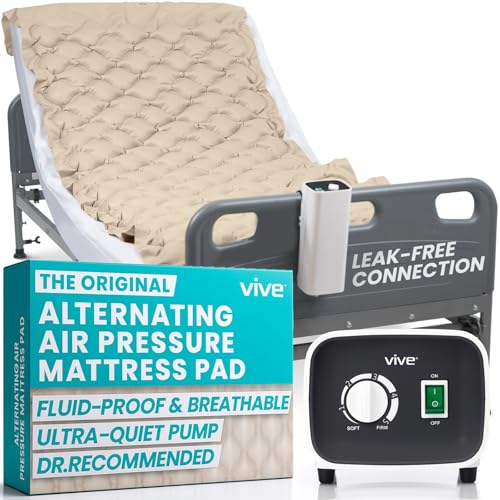
Best for immobilized individuals needing ongoing pressure redistribution. The Vive pad uses an advanced wave-like therapy across 130 air cells to evenly distribute weight and relieve pressure spots. The whisper-quiet pump operates at about 22 dBA, enabling restful sleep with customizable pressure levels. It includes a waterproof, breathable ulcer cushion for added skin protection. The system suits caregivers seeking a reliable, low-noise setup for at-home care or small facilities. Caution: Some users may require longer acclimation to the alternating cycle to feel maximum relief.
Drive Medical Med-Aire Low Air Loss Mattress

Better for home or facility environments needing robust support with replaceable bladders. The Drive Medical system features an individual air cell design with 20 replaceable 8-inch bladders and a built-in pillow feature for head stability. It includes a protective, vapor-permeable cover to reduce moisture and friction. Choose this if you value targeted care and a modular setup that can be adjusted as needs change. Limitation: The emphasis is on durability and support; weight considerations should align with the product’s maximum capacity.
MedVance Low Air Loss Mattress System

Best for quiet operation and digital monitoring with alarms. The system uses a hospital-grade pump that operates under 20 dB, with a digital LED screen showing weight and pressure. It supports low air loss with an 8″ cell depth and a pillow function to sustain head comfort in static mode. Ideal for facilities or homes needing precise monitoring and a quick deflation option via a red emergency tag. Caution: As with all digital control systems, occasional maintenance of the control unit is recommended.
Lunderg Alternating Air Pressure Pad with Static Mode
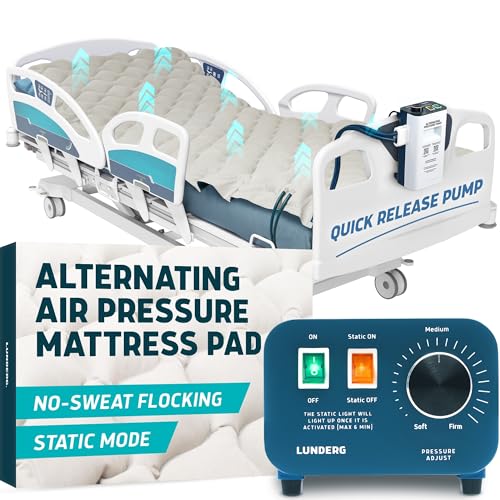
Best for versatile care in hospitals or home settings needing both alternating and static options. The Lunderg pad offers quiet operation at 23 dBA with Soft-to-Firm pressure control and a static mode where all cells stay inflated for a stable surface. It supports up to 300 lbs, making it suitable for heavier patients. Caution: The static mode is a fixed surface and may feel different from active alternating therapy for some users.
Kekoy 130 Bubble Air Cells Mattress Pad

Best for early-stage pressure sore prevention and daily redistribution. Kekoy’s pad uses 130 bubble air cells to continuously redistribute weight, reducing pressure on hips, back, shoulders, and heels. It also features a waterproof cover and a whisper-quiet pump. Choose this if you want a comprehensive 130-cell design with practical maintenance features. Limitation: Larger sizes may require more storage space and setup time compared to smaller overlays.
Buying Guide
What should you consider when choosing a low air loss overlay?
- Care setting: Home use versus facility use may dictate durability, pump noise, and control features.
- Pressure redistribution: Look for alternating pressure with a sufficient number of cells to ensure even support.
- Noise level: Quiet pumps (around 20–23 dBA) improve sleep quality for patients and caregivers.
- Cell depth and surface feel: Deeper cells offer stronger support; consider flocked or fabric-like surfaces for comfort and moisture control.
- Weight capacity: Ensure the model supports the patient’s weight and ongoing mobility needs.
- Maintenance: Check for easy-to-clean covers, replaceable bladders, and remote or digital monitoring features if needed.
How to use and maintain a low air loss overlay?
- Follow the included setup instructions and keep the surface clean and dry to prevent skin issues.
- Regularly inspect the air cells for leaks and ensure the pump operates quietly without unusual noises.
- Coordinate turning schedules with caregivers to maximize pressure relief and skin health.
Frequently Asked Questions
- What is a low air loss mattress overlay?
It is a pneumatic surface that distributes body weight through many small air cells to reduce pressure and promote cooling. - Who should use them?
Individuals at risk of pressure sores, bedridden patients, and care facilities seeking improved skin integrity. - Are these overlays easy to use at home?
Yes, most units include quiet pumps and simple controls suitable for home care. - Can I switch between alternating and static modes?
Several models offer both modes, allowing tailored support for comfort and healing. - Do overlays require professional installation?
Most are plug-and-play with straightforward setup; follow the manufacturer’s safety guidelines. - How do I know which size to buy?
Measure the patient’s bed space and match overlay dimensions to mattress size for full coverage.