Best Hospital Bed Pressure Relief Mattresses for Home Care
When choosing a hospital bed pressure relief mattress, the top goal is to prevent bedsores, improve comfort, and support long-term bed rest. This guide highlights five strong options suited for bedridden or semi-immobile users, focusing on pressure redistribution, quiet operation, and ease of use. Ideal buyers include caregivers seeking reliable, low-maintenance solutions for home care, nursing facilities, or hospital settings. The summary below helps you compare key features at a glance.
| Product | Key Benefit | Best For |
|---|---|---|
| Vive Alternating Air Pressure Mattress Pad | 130-air-cell system with whisper-quiet pump | General bed sores prevention, caregiver-friendly use |
| Lunderg Alternating Air Pressure Mattress Pad | Static mode option for non-changing surface | Bedridden users needing rest with occasional non-alternating relief |
| MedVance Premium Alternating Mattress Pad | Ultra-quiet digital pump, 6-minute cycles | High-need care with quiet operation |
| MedVance Low Air Loss Mattress Replacement System | Low air loss with 8″ deep cells | Prevention and recovery in long-term care |
| Invacare Premier Hospital Bed Mattress | 2 independent foam layers, contour support | High-capacity risk management, solid transfers |
Vive Alternating Air Pressure Mattress Pad
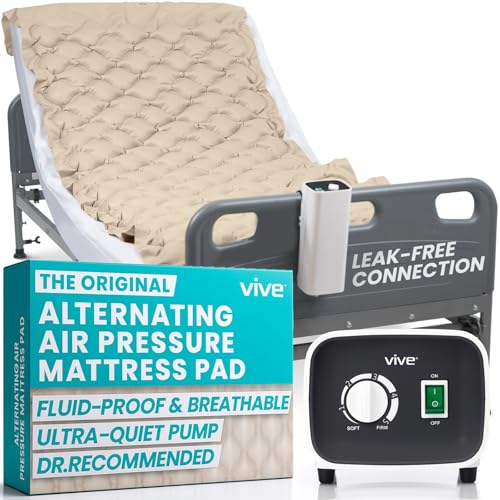
The Vive mattress uses a 130 air-cell array to evenly distribute weight and relieve pressure spots. Its wave-like therapy alternates cell inflation to reduce skin maceration and promote circulation. A 22 dBA whisper-quiet pump supports continuous airflow and customizable pressure levels. This makes it well suited for home caregivers seeking a low-noise solution that helps bedridden patients minimize pressure ulcers. Caution: The system relies on correct sizing and proper setup to maximize comfort and efficacy.
Lunderg Alternating Air Pressure Mattress Pad
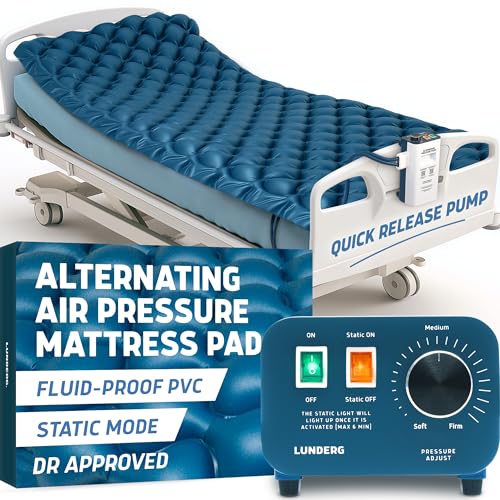
Designed for hospital beds or home mattresses, Lunderg integrates a quiet 23 dBA pump with a static mode option. The static mode allows a stable surface when alternating pressure is not needed, which can aid users requiring consistent support or those transitioning between care plans. Best for patients who benefit from both pressure relief and occasional solidity. Limitation: Alternating cycles may be less intuitive for first-time users without caregiver training.
MedVance Premium Alternating Mattress Pad

This mattress pad features an ultra-quiet digital pump and a 6-minute cycle for even weight distribution. It emphasizes bed sore prevention and recovery, making it a strong choice for long-term care settings or home care with heightened needs. Best for users who require low-noise operation and predictable pressure changes; choose this if you value precise digital control. Caution: Ensure compatible bed dimensions and power access in the care area.
MedVance Low Air Loss Mattress with Alarm

This replacement system uses 8-inch deep air cells in a cell-on-cell design to prevent bottoming out and offers up to 24 hours of power outage protection. The pillow function maintains head-cell inflation for static comfort. Best for patients who require reliable pressure relief with robust skin protection and a safeguard against power interruptions. Limitation: Heavy physical setup may require assistance during installation.
Invacare Premier Hospital Bed Mattress
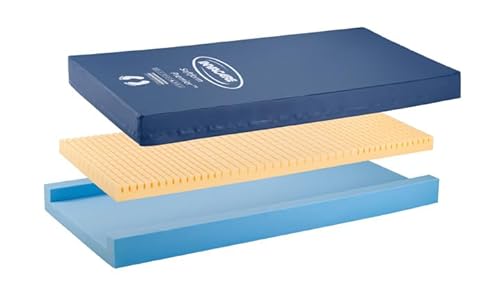
This 2-layer foam mattress uses a U-core and contoured inserts to optimize pressure redistribution for patients up to Very High Risk with a 500 lb capacity. It provides specialized support for head, mid-section, and feet, and adds enhanced side support for safer transfers. Best for facilities and families needing a sturdy, high-capacity option. Limitation: Foam-based design may require more frequent rotation or replacement to maintain comfort.
Buying Guide: Key Purchase Considerations
What configuration best fits the care setting?
Alternating air pressure systems excel at redistributing pressure across a bed surface, while low air loss options emphasize moisture and heat management to further prevent skin breakdown. Choose based on whether the priority is sheer pressure relief, moisture control, or a combination for long-term use.
How quiet should the pump be?
Quiet operation is essential for restful sleep. Look for pumps advertised as whisper-quiet or under 23 dBA, especially for home bedrooms or overnight caregivers.
What size and weight capacity are needed?
Match mattress dimensions to your bed frame and consider weight limits. Some models support up to 300–500 lb capacities, which matters for heavier patients and reinforcements during transfers.
Are there modes for non-alternating use?
Static or non-ventilated modes provide a stable surface for patients who do not require continuous pressure cycling. These modes can help with comfort during sleep or transition periods.
What maintenance or setup is required?
Some units require longer inflation times, warmer rooms for full expansion, or the presence of corner straps and non-slip bottoms. Ensure caregiver familiarity with maintenance steps to sustain effectiveness.
Is a waterproof or washable cover important?
Waterproof covers simplify hygiene and reduce skin exposure to moisture and fluids. This is especially relevant for patients with skin integrity concerns or in clinical environments.
How easy is the product to install?
Consider whether a system includes simple mounting features, quick-connect fittings, and clearly labeled controls to minimize setup challenges for new users or caregivers.
Frequently Asked Questions
- What is a pressure relief mattress used for? It helps prevent bed sores by distributing pressure more evenly across the body for bedridden patients.
- How often should the mattress cycle or be tested? Check operation daily and follow product guidance on cycle duration (commonly around 6 minutes for alternating systems).
- Can these mattresses be used on all hospital beds? Most models are designed for standard hospital or home bed frames; verify compatibility with your bed type.
- Do these require professional installation? Some are simple to set up with caregiver assistance, while others may benefit from facility staff support.
- What is the advantage of a low air loss system? It reduces skin moisture and helps maintain skin integrity by managing heat and humidity at the skin surface.
- Are there accessories that improve use? Waterproof covers, side straps, and static mode options can enhance comfort and safety.