Best Hospital Air Mattress for Bedsores: Top Solutions for Pressure Ulcers
If you’re searching for effective relief from bedsores and pressure ulcers, these hospital-grade air mattresses are designed to reduce pressure points and improve circulation for bedridden or limited-mobility users. The right option depends on who needs it most—caregivers seeking quiet, reliable pumping, or patients needing adjustable support and static modes. Below are five well-suited choices, with notes on best use cases, benefits, and limitations to help you compare quickly.
Product Overview (summary):
| Product | Best For | Key Benefit |
|---|---|---|
| Vive Alternating Air Pressure Mattress Pad | Long-term care with quiet operation | 130 cells, whisper-quiet pump |
| Kekoy 130 Bubble Air Cells Pad | Early-stage pressure care | 130 cells for continuous redistribution |
| Lunderg Doctor-Recommended Pad | Home or hospital care, static option | Static mode and quiet operation |
| MedVance Premium Alternating Pad | Integrated alarms and care facilities | Ultra-quiet pump, digital controls |
| Vive 8″ Alternating Mattress | General pain prevention and relief | 16 chambers, adjustable settings |
Vive Alternating Air Pressure Mattress Pad
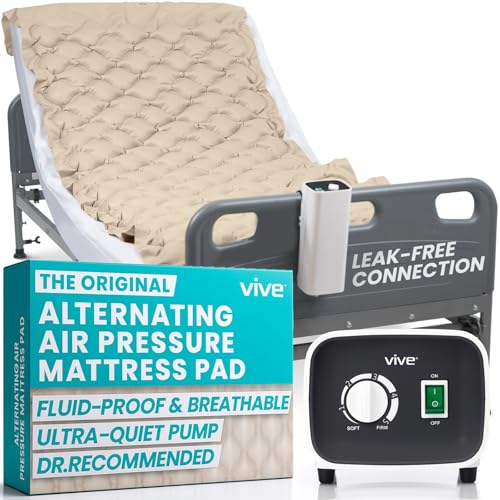
Brand: Vive. Features include 130 air cells with an advanced wave-like therapy pattern that alternates inflation to evenly distribute weight and relieve pressure spots. The 22 dBA whisper-quiet pump offers customizable pressure levels, with each cycle lasting about six minutes. Best for caregivers seeking durable, low-noise performance for long-term use. Caution: noise level is minimal, but monitor for any pump heat during extended cycles.
MedVance Low Air Loss Mattress Replacement System

Brand: MedVance. Features an ultra-quiet pump (<20 dB) and a fully digital interface with alarms, enabling quick adjustments and patient-specific tuning. The 8″ deep air cells employ a cell-on-cell design to prevent bottoming out and provide up to 24 hours of power-outage protection. Best for facilities or home care setups needing precise control and quick deflation in emergencies. Caution: requires monitoring of battery backup if power is unstable.
Kekoy 130 Bubble Air Cells Pad

Brand: Kekoy. This pad uses 130 bubble air cells to distribute weight and reduce pressure hotspots, with a focus on early-stage pressure care. It’s suited for elderly care and those at risk of ulcers, including post-surgery recovery. Best for users needing continuous pressure redistribution without frequent manual repositioning. Caution: some users may require a larger size for full body coverage depending on bed dimensions.
Kekoy Alternating Air Pressure Mattress Pad (75″ x 36″)

Brand: Kekoy. Features include alternating pressure with low air loss technology and a waterproof heat-resistant ulcer cushion pad. Suitable for home use and daily care in long-term care settings. Best for patients requiring both pressure redistribution and a cooler, drier skin environment. Caution: ensure the waterproof cover is maintained to prevent skin exposure to moisture during long sessions.
Lunderg Alternating Air Pressure Mattress Pad
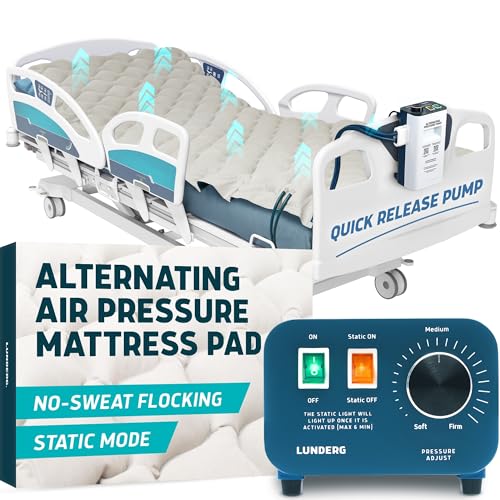
Brand: Lunderg. Doctor- and therapist-approved to prevent and heal bedsores, with a static mode option for steady support. Quiet operation at 23 dBA and compatibility for hospital beds or home mattresses, supporting up to 300 lbs. Best for patients who benefit from a switchable alternating/static mode and a medical-grade design. Caution: static mode reduces air movement, which may be less suitable for active repositioning needs.
MedVance Premium Alternating Pad

Brand: MedVance. This premium pad emphasizes ultra-quiet digital pumping and a robust alternating cycle every six minutes to improve weight distribution and circulation. It targets bed sore prevention and recovery, important for long-term care. Best for facilities or homes needing consistent, low-noise performance and clear alarms. Caution: digital controls require periodic checks to ensure alarms stay functional.
Lunderg Static Mode With Flocking Add-on
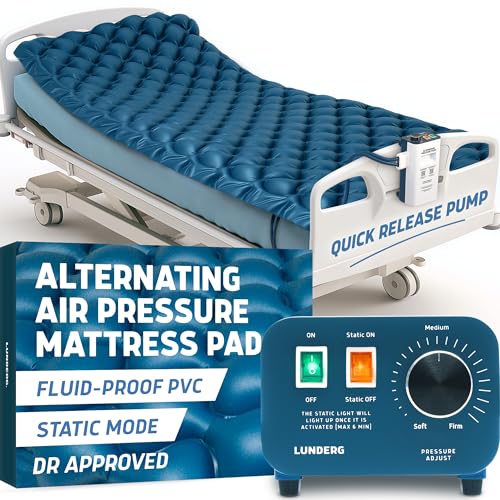
Brand: Lunderg. Combines alternating pressure with a flocked surface to offer a softer, fabric-like feel and improved comfort. Quiet pump at 23 dBA and static mode for stability. Best for patients who benefit from a breathable surface and reduced sweating. Caution: flocking adds a fabric-like texture that may take some getting used to for first-time users.
Buying Guide
What should you consider when choosing an air mattress for bedsores?
- Care setting: Home care vs. facility use may dictate whether you prioritize digital alarms, durability, or ultra-quiet pumps.
- Pressure distribution: More cells (like 130) generally offer finer redistribution; verify cycle duration and coverage for your bed size.
- Static vs. alternating mode: Static mode provides a stable surface; alternating mode reduces shear and helps healing, but may feel different to the patient.
- Cover and waterproofing: A waterproof, easy-to-clean top helps hygiene and longevity; check for heat resistance and ease of replacement.
- Noise level: Pumps around 20–23 dB are effectively whisper-quiet; consider whether any pump mounting could affect bed height or access.
- Weight capacity and stability: Choose a mattress that supports the user’s weight and bed frame type; verify compatibility with hospital or home beds.
- Power reliability: Systems with alarms or power-outage protection are advantageous for uninterrupted care.
Frequently Asked Questions
- What makes an alternating air mattress better for bedsores?
- Is a static mode necessary?
- How important is pump noise?
- Can these mats be used at home?
- Do all models require professional setup?
- What size should I choose?
Alternating air mattresses cycle pressure to redistribute weight, reduce hotspots, and improve circulation, which helps prevent skin breakdown.
Static mode provides a stable surface and can be useful during rest or for patients who require predictable support without constant pressure changes.
Lower noise levels improve patient comfort and sleep quality, especially in long-term care settings.
Yes, many models are designed for home or hospital bed use, with features suitable for caregivers managing daily care.
Most are user-friendly and come with simple inflation controls, though certain digital systems may benefit from caregiver guidance during initial setup.
Choose a size that matches the bed and patient body measurements to ensure full coverage and effective pressure redistribution.