Best Hammock With Air Mattress for Comfort Outside
Answering the search intent directly: this guide highlights top hammock-with-air-mattress setups that blend a bed-like feel with outdoor versatility. These picks are best for campers who want a self-contained sleeping system, backpackers seeking compact comfort, or backyard loungers who crave a restful night under the stars. Below you’ll find five carefully chosen products, each with who it’s best for and why. A quick buyer’s table at the start helps compare essentials at a glance.
| Product | Best For | Why It Stands Out |
|---|---|---|
| Haven Tent Original Lay-Flat Hammock Tent | Backpacking campers and weekend hikers | Flat sleeping platform, weatherproof and mosquito-free, lightweight and compact. |
| Rivenlo Camping Hammock Tent (Dark Green) | Hikers valuing quick setup | 3-in-1 versatility with rain fly and net for breathable protection. |
| AlphaBeing Inflatable Lounger | Casual outdoor lounging and lakeside chill | No pump required, anti-deflation tech, high weight capacity. |
| Gear Doctors ApolloAir Sleeping Pad | Lightweight backpackers | Ultralight, compact pack size, fast inflation and solid support. |
| MOXILS Sleeping Pad | All-weather campers seeking portability | Body-mapping design, quick foot-inflate, durable material. |
Haven Tent Original Lay-Flat Hammock Tent
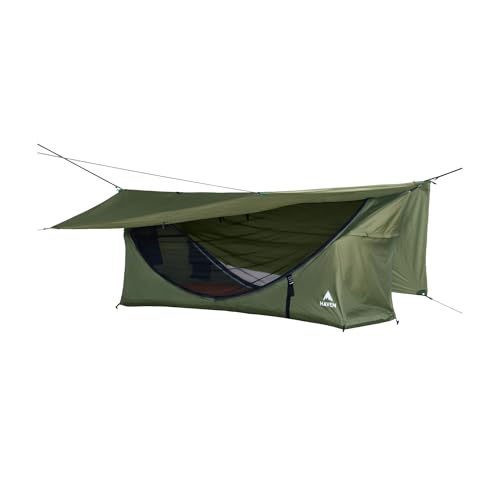
The Haven Tent Original Lay-Flat Hammock Tent combines a bed-like hammock with built-in protection. Its patent-pending lay-flat design reduces pressure points, enabling sleep on back, side, or stomach. It is best for campers who want a single, all-weather sleeping solution and value a mosquito-net and rainfly in one package. The rainfly is rated at 4,000mm waterproof, and the hammock body carries a similar coating for dependable shelter. Setup takes minutes with tree straps—no poles required. Trail weight is about 6 lbs 1.3 oz, and it packs to a compact 15x6x6 inches.
Best for: Backpackers seeking a bed-like outdoors experience with integrated weather protection. Limitations: Heavier than ultralight pads and less suited for ground sleeping alternatives if trees aren’t available.
Rivenlo Camping Hammock Tent with Mosquito Net & RainFly (Dark Green)

This 3-in-1 hammock tent functions as a hammock, a standalone sleeping hammock, or a rain-protected tent when used with the rain fly. It includes a mosquito net to keep bugs at bay and supports comfortable, supine sleeping with an optional sleeping pad (not included). It is lightweight—about 2.5 lb—and uses 30D nylon for durability. Quick setup is emphasized with included poles and straps, making it a strong pick for solo travelers who want fast, flexible shelter.
Best for: Solo hikers who want a fast, private setup and built-in insect protection. Limitations: Requires a separate sleeping pad for full comfort in certain configurations.
Rivenlo Camping Hammock Tent (Dark Green) With Enhanced Setup
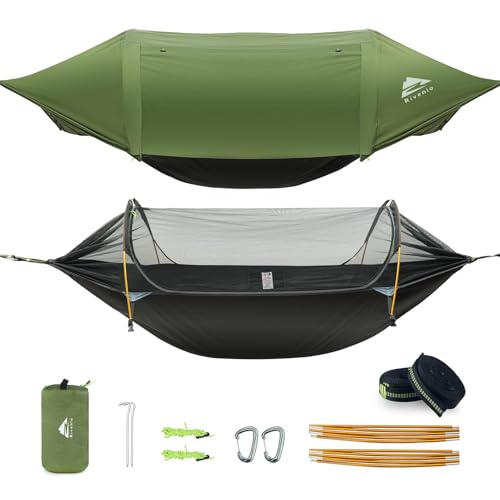
Another Rivenlo option emphasizes the 3-in-1 function with two foldable aluminum support poles and 110″ straps for precise length control. It is built with 70D nylon and supports up to 440 lbs, giving a comfortable space for one person with a bit of room. The design targets quick assembly, enabling a fast transition from trail to rest. Best for: Campers who prioritize stability and quick build. Limitations: Additional components needed for mosquito net and rain protection may add setup steps.
Gear Doctors ApolloAir 5.2 Ultralight Sleeping Pad

The ApolloAir ultralight sleeping pad emphasizes compact packing and a 72.8″ x 22″ footprint when inflated, with a 3.2″ thickness for comfort. The design includes a pump sack and a compact carry system that fits easily in a pack. It’s built for quick inflation and deflation, helping users maximize rest without heavy gear. Intended for backpackers needing reliable ground padding for tents or bivouacs.
Best for: Backpackers who want a compact, fast-inflate pad. Limitations: Requires a sleeping surface or hammock for elevated setups; not a self-contained shelter.
MOXILS Sleeping Pad

MOXILS introduces a sleeping pad with body-mapping technology and a built-in foot pump for quick inflation—about 20 seconds. The 75″ x 25″ surface provides broad coverage, with a 1.9 lb weight. The pad uses durable, outdoor-grade materials and includes a repair kit. It’s designed for versatile camping use, from ground sleeping to supplementing a hammock-based setup. Best for: Campers who want a roomy, quickly inflated pad with robust construction. Limitations: Like many pads, performance is best when paired with a ground or elevated shelter for insulation from cold ground.
Buying Guide
What should you look for in a hammock with an air mattress?
Key considerations include weight, packability, and integrated weather protection. A flat sleeping surface reduces pressure points and improves comfort. Look for a rainfly rating and a durable hammock fabric (at least 210T or similar) for all-weather use. If you camp with others, consider models with mosquito nets for bug protection and separate pads for insulation.
Which setup fits different camping styles?
- Backpackers: Prioritize ultralight, compact pads like ApolloAir or MOXILS with a lightweight hammock for minimal bulk.
- Car campers: A more robust hammock tent with integrated rainfly and mosquito net (such as Haven Tent) provides comfort and protection.
- Casual loungers: Inflatable loungers (like AlphaBeing) offer relaxation with simple inflation, though not ideal for cold nights.
Padding vs. shelter: how to balance?
Padding adds warmth and comfort; shelter protects from weather. For damp or windy nights, pair a hammock with a rainfly and a pad that resists moisture. If bugs are a concern, select models with integrated nets. Consider if you prefer a 3-in-1 design that combines hammock, tent, and net or a separate sleeping pad that travels lighter.
Sizing and weight considerations
Check the weight and packed dimensions. Portable options like Haven Tent pack down compactly and suit fast-moving trips. Heavier options can offer more comfort but may reduce mobility. Weight-bearing limits should align with your body weight plus gear.
Durability and warranties
Choose fabrics with water resistance and durable coatings. While product pages mention coatings and lifespan promises, verify the material specs and any included repair kits. A straightforward warranty or replacement policy improves long-term reliability.
How to set up safely
Always use suitable anchor points, ensure straps are secure, and check for potential environmental hazards. For mosquito nets, ensure ventilation and avoid blocked airflow. Practice setup at home prior to trips to speed up on-site assembly.
FAQ
- Q: Can I use a standard sleeping pad with any hammock tent? A: Most hammocks accommodate sleeping pads, but some 3-in-1 systems include a pad as an accessory. Check the product’s pad compatibility.
- Q: Is a rainfly enough to stay dry in a downpour? A: Rainflies provide rain protection; ensure the canopy is properly positioned and that seams are sealed when possible.
- Q: Do these require wood or trees for setup? A: Many hammocks rely on tree straps, but some models can be used with ground anchors if trees aren’t available.
- Q: Are these suitable for winter camping? A: Insulated pads add warmth, but ensure proper insulation from the ground and consider a thicker pad or additional under-quilts for cold nights.
- Q: Which option is best for beginners? A: Look for quick-setup models with built-in nets and simple inflation, such as the Haven Tent or Rivenlo kits, to minimize setup complexity.