Best Foam Air Mattress Camping for Comfort and Support
This guide highlights top foam-air camping mattresses designed for a restful night outdoors. It targets campers who want a balance of comfort, support, and portability. Each product is chosen for its unique blend of foam and air technology, weight limits, and ease of setup. The top picks span self-inflating designs with built-in pumps and innovative structures, ideal for car campers, hiking enthusiasts who avoid backpacking, and extra beds for tents or cabins. Below is a quick comparison table of the featured products.
| Product | Thickness | Best For | |
|---|---|---|---|
| Lost Horizon Air & Foam Camping Mattress (Full) | 4.5″ | Couples and heavier sleepers | 440 lb max capacity |
| Acacia 4.3″ Self-Inflating Foam Pad | 4.3″ | Side sleepers, ultralight packs | 40% deflation compression |
| Lost Horizon Air & Foam (4.5″ Thick, Full) | 4.5″ | Wide sleepers, heavier builds | 440 lb max capacity |
| Hikenture 4″ Thick Self-Inflating Pad (2-Person) | 4″ | Couples, RV and car campers | Electric pump option |
| Elegear CumbreX 4″ Foam Pad | 4″ | All-season comfort, versatile | R-value 9.5 |
Lost Horizon Air & Foam Camping Mattress, Full Size

The Lost Horizon Self-Inflating Sleeping Pad combines air and foam in a 4.5-inch profile with up to 440 pounds weight capacity. Its internal structure aims for even distribution to minimize pressure points and promote comfort. It offers adjustable softness for personalized support and quiet operation to reduce sleep disturbances. This pad is not intended for backpacking, making it well-suited for car camping, guest beds, or cabin setups where a sturdy, long-lasting sleeping surface is valued.
Best for: Couples or heavier sleepers needing stable support and room to spread out. Why selected: High foam content with a robust weight rating supports diverse body types without bottoming out. Caution: Not ideal for backpacking or ultralight trips due to size and weight.
Acacia 4.3″ Thick Self-Inflating Sleeping Pad

The Acacia pad uses a 4.3-inch foam core and a unique Y-shaped telescopic structure, delivering a compact footprint when packed. It supports up to 440 pounds and features a soft, quiet surface. The 60% volume reduction on deflation aids portability. Its dual benefits of foam support and self-inflation suit side sleepers and campers who move a lot during the night.
Better for: Campers who need a higher weight capacity with easier packing. Why selected: Combines comfortable foam support with a compact, pack-friendly design. Limitation: Slightly bulkier than ultra-light options, though still portable.
Lost Horizon Air & Foam Camping Mattress, 4.5″ Thick (Cot)
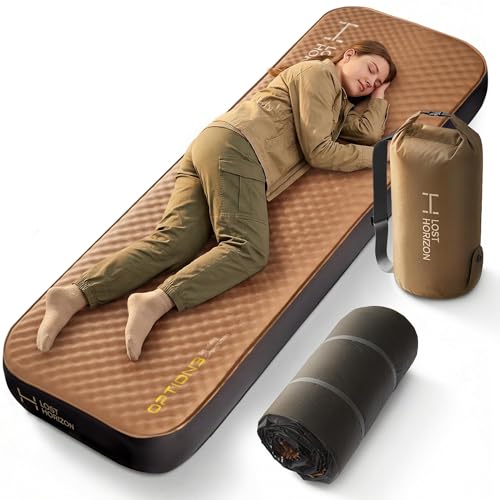
This variant mirrors the Full-size version with 4.5-inch thickness and a 220-pound weight capacity, designed for stable sleep on cots or stable ground. The combination of air and foam supports even weight distribution, reducing pressure points for longer sleep. It remains quiet during movement, reducing sleep disruption in shared tents.
Best for: Individuals who prefer cot-style sleeping surfaces with strong support. Why selected: Broad compatibility with cots and similar frames, plus high weight tolerance. Caution: Heavier and bulkier, which may affect backpacking plans.
Hikenture 4″ Thick Self-Inflating Pad (2-Person)

The Hikenture 4-inch pad for two sleepers uses a built-in electric pump to inflate to hotel-like firmness in about 90 seconds. Its 2-way valve supports easy tuning of softness. The Y-structure design reduces bulk while improving insulation, and the product touts a comfortable, low-noise surface ideal for shared tents and car camping. An optional electric pump (sold separately) speeds setup further.
Choose this if: You need a double sleeping surface that inflates quickly and remains easy to pack. Limitation: Electric pump availability may depend on accessory purchases, and the pad is heavier than single-person models.
Elegear CumbreX Air & Foam Self-Inflating Pad

The Elegear CumbreX features 4 inches of foam with built-in memory foam structure and a one-touch inflation system. It uses a hollow memory-foam design for contouring comfort and an air cushion to customize firmness. The pad includes a built-in pillow for neck support and insulation with a high R-value. It’s suited for varied seasons and ground conditions, making it a flexible option for dedicated campers.
Best for: Campers seeking adjustable comfort and a built-in pump with memory foam support. Why selected: High customization and added head/neck support. Caution: Pump endurance may vary with usage and power source; monitor charging levels.
OGERY Self-Inflating Pad With Electric Pump

The OGERY pad uses a 3.15-inch memory foam core with a detachable electric pump for inflation and a USB-C rechargeable option. It delivers a soft, quiet surface for tent, car camping, or RV use. The memory foam layer provides a stable feel on uneven ground, and the pump makes inflation quick. It’s a practical choice for quick setups without a separate air pump or compressor.
Best for: Campers who want a memory-foam feel with quick setup via built-in pump. Why selected: Combination of foam support and convenient pump. Limitation: Foam depth is thinner than some 4.5″ options, which may affect initial cushioning for very hard terrain.
Hikenture 4″ Thick Self-Inflating Pad (2-Person, Alternative)
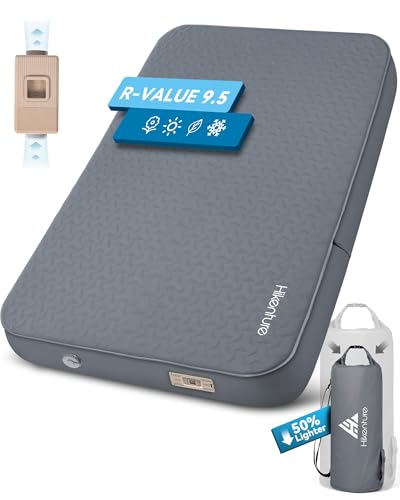
This Hikenture model mirrors the single version’s core features with a 4-inch foam core and built-in electric pump for two sleepers. It emphasizes fast inflation, reduced bulk, and a robust R-value for warmth. Its double-pad design makes it a solid option for couples who value speed and stability in a compact form.
Best for: Two-person camping setups needing quick inflation and stable support. Why selected: Strong insulation and easy packing for shared tent spaces. Caution: Heavier than solo pads, which can impact transport for hikers.
Buying Guide
Key considerations when choosing a foam-air camping mattress include thickness, weight capacity, packing size, and setup method. The right pick depends on how you camp, your sleeping style, and whether you prioritize speed or durability.
- How thick should the pad be? Thicker models (4 inches and up) typically offer better contouring and comfort for side sleepers, but they weigh more and take more space.
- What is the best setup method? Self-inflating with a built-in pump is fastest for solo campers; two-person pads should balance space and portability with the comfort of two sleepers.
- Is memory foam worth it? Memory foam or high-density foam layers improve pressure relief and stability on uneven ground, especially when combined with air technology.
- How important is packing size? If you drive to camp, size and weight matter less than if you’re carrying gear on foot. Look for deflation efficiency and compression features.
- What about insulation? R-value or insulation features help against ground cold. Higher R-values are beneficial in cooler seasons or mountain environments.
FAQ
- What is a foam-air camping mattress? A foam-air mattress combines a foam core or layer with air-filled chambers to balance support, comfort, and adjustability for diverse sleeping preferences.
- Are these pads suitable for backpacking? Most listed models prioritize comfort and stability over ultra-light backpacking; they are better suited for car camping or vehicle-based trips.
- How does a self-inflating pad work? Self-inflating pads use an internal foam core that expands when the valve is opened, drawing air in; a pump or manual inflation fine-tunes firmness.
- Can I use these on a cot or hard ground? Yes, many models are designed to work well on cots or firm ground, distributing weight to minimize pressure points.
- Do built-in pumps run on batteries? Some models include built-in electric pumps, while others rely on manual pump sacks or external pumps. Check the product details for power needs.
- What is a good pick for couples? Look for 4-inch or thicker pads with high weight capacity and a double-pad design or two-person configuration for shared sleeping space.