Best Drive Air Mattress for Hospital Bed: Top Picks for Home and Facility Use
The best drive air mattress for a hospital bed delivers reliable pressure redistribution, low friction, and easy setup for patients at risk of ulcers or needing extended bed rest. These selections are ideal for caregivers at home and healthcare facilities seeking durable, easy-to-maintain systems. The list below highlights five Drive Medical options that balance seating comfort, immersion, and safety features with practical limitations in mind.
Summary table of chosen products:
| Product | Key Feature | Best For |
|---|---|---|
| Drive Medical Med-Aire Low Air Loss Mattress Replacement System | Alternating pressure, low air loss, 20 replaceable bladders | Patients needing reliable pressure redistribution in home or facility settings |
| Drive Medical 14029 Med-Aire Low Air Loss Mattress Replacement System | Digital pump with diagnostic alarms, 20 cells, multiple cycle times | Caregivers needing adjustable control and microclimate management |
| Drive Medical Med Aire Plus Bariatric Low Air Loss Mattress System | Supports up to bariatric patients, 20 removable bladders | Heavier patients requiring robust support and power-outage protection |
| Drive Medical Med-Aire Melody Alternating & Low Air Loss Mattress | Adjustable weight settings, visual low-air alarm | Customizable comfort for varying patient sizes and needs |
| Drive Medical 14029 Med-Aire Low Air Loss Mattress Replacement System (Blue) | 20 individually replaceable bladders, pillow feature, diagnostic alarms | General use with emphasis on immersion and head stability |
Drive Medical Med-Aire Low Air Loss Mattress Replacement System

Reference features: Pressure relief through alternating pressure and low air loss; 20 replaceable 8-inch bladders; vapor-permeable cover with moisture-reducing properties; built-in pillow feature for head stability. Best for caregivers needing consistent pressure redistribution and moisture control in home or facility settings. Caution: ensure proper pump power availability and monitor for seal integrity over time, especially with frequent patient transfers.
Drive Medical 14029 Med-Aire Low Air Loss Mattress Replacement System

Reference features: Active system with alternating pressure and low air loss for improved microclimate control; digital pump with diagnostic alarms; 20 individual air cells plus a pillow feature; four cycle times and adjustable weight settings. Best for caregivers who need precise control and alerts. Choose this if you require auto-returns after static positioning and flexible cycle options. Limitation: more advanced features may require routine electrical checks and firmware updates if available.
Drive Medical Med Aire Plus Bariatric Low Air Loss Mattress System

Reference features: Bariatric system with alternating pressure; 10-inch deep cell design to prevent bottoming out; 20 removable bladders with digital pump and diagnostic alarms; auto returns to alternating pressure after two hours of static mode. Best for heavier patients needing substantial immersion and reliable power-outage protection. Limitation: overall footprint may be larger and require more space for installation.
Drive Medical Med Aire Plus Bariatric Heavy Duty Low Air Loss Mattress System
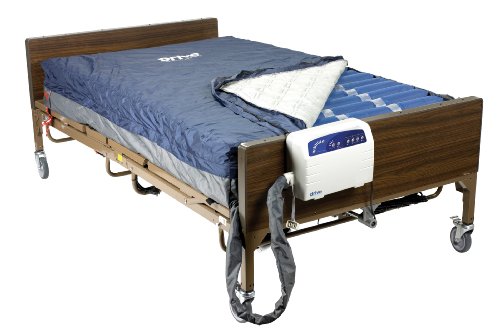
Reference features: Heavy-duty bariatric design with alternating pressure; 10-inch deep air cells, 20 replaceable bladders, digital pump with alarms, auto-return in static mode. Best for patients needing robust support and longer-term use in a facility or home. Caution: heavier setup may require professional installation and sufficient bed frame capacity.
Drive Medical 14026 Med-Aire Melody Mattress

Reference features: Alternating pressure and low air loss; adjustable weight settings; visual low air pressure alarm; designed for customizable immersion and patient compliance. Best for facilities needing a balance of comfort and clear visual alerts. Better for homes where caregivers prefer straightforward control without extensive configuration. Limitation: weight-based adjustments may require ongoing monitoring to maintain ideal immersion levels.
Drive Medical 14029 Med-Aire Low Air Loss Mattress Replacement System (Blue)

Reference features: Medical air mattress with alternating pressure and low air loss; 20 independent cells; pillow feature for head stability; digital control with four cycle times and adjustable weight settings; alarms for diagnostics and auto-returns. Best for general use with emphasis on immersion and head stability. Use this if you value a familiar control surface and want reliable diagnostics. Caution: ensure compatibility with existing bed electronics and power supply.
Buying Guide
What matters most when choosing a drive air mattress for a hospital bed?
- Pressure redistribution: Prioritize products offering true alternating pressure and low air loss to reduce the risk of ulcers.
- Cell design and immersion: Look for 8- or 10-inch cells with cell-on-cell layouts to prevent bottoming out and improve comfort.
- Pump features: Consider units with diagnostic alarms, auto-return to alternate mode, and adjustable weight settings for patient-specific needs.
- Footprint and weight capacity: Bariatric options are essential for heavier patients; verify bed frame compatibility and space requirements.
- Durability and maintenance: Removable bladders and durable covers help with cleaning and long-term upkeep in busy care settings.
- Noise level and user experience: Quiet pumps improve rest; look for models with low dBA ratings and sleep-friendly operation.
- Power outage protection: Systems with 24-hour or extended power outage support ensure patient safety during outages.
- Ease of use: Digital controls, clear alarms, and straightforward setup reduce caregiver burden.
Practical Buying Questions
- Do I need a bariatric model for heavier patients? If yes, choose bariatric options with higher weight capacity and deep cell design.
- Is a pillow feature important for head stability? Some models include it and can improve comfort for static positioning.
- How many cells should the mattress have? More cells generally improve immersion and even pressure distribution.
- Are diagnostic alarms essential? Alarms help caregivers monitor pressure and pump status in real time.
- What about maintenance? Opt for systems with removable bladders and washable covers to simplify cleaning.
FAQ
- What is the difference between alternating pressure and low air loss mattresses? Alternating pressure cycles through different bladder sections; low air loss reduces heat and moisture buildup by venting air through the system.
- Can these mattresses work without professional installation? Most are designed for standard hospital bed frames, but some setups may benefit from professional assistance.
- Do these systems have safety features for power failures? Many models include protection modes and alarms to resume safe operation after power restoration.
- How often should bladders be replaced or serviced? Replace or inspect bladders per manufacturer guidance or if leaks or wear are detected.
- Are there models suitable for at-home use? Yes, several Drive Medical air loss mattresses are designed for home use and home care environments.
- Which features are most important for preventing pressure ulcers? Look for true pressure redistribution, adequate immersion, a stable head region, and reliable alarms.