Best Bed Sore Mattress Pad Picks for Home or Hospital Use
Answering the search for effective bed sore prevention, these mattress pads use alternating pressure to reduce pressure points and improve circulation for bedridden or limited-mobility users. They’re best for caregivers seeking hospital-quality relief at home, for long-term care facilities, and for individuals at risk of pressure ulcers. The list below highlights five top options based on design, quiet operation, and ease of use. Use the quick comparison table to help decide which pad aligns with a specific care setting and patient needs.
| Product | Best For |
|---|---|
| Vive Alternating Air Pressure Mattress Pad | Overall care, quiet operation, strong durability |
| MedVance Premium Alternating Pad | Home hospital bed use, digital controls |
| Lunderg Alternating Pad with Static Mode | Static mode preference, quiet operation |
| Kekoy 130-Cell Pad | 130-cell coverage, adjustable pump |
| Careboda Alternating Pad | Low-noise, easy setup, customizable levels |
Vive Alternating Air Pressure Mattress Pad
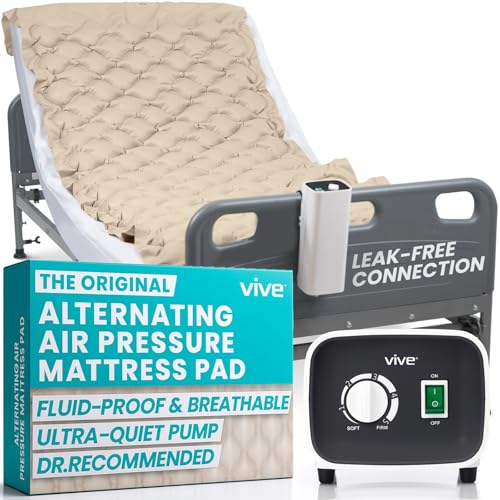
This pad uses a 130-cell arrangement with a proprietary wave-like therapy to distribute weight evenly. The pump operates at 22 dBA, delivering a quiet, continuous airflow with multiple pressure levels for customization. It is designed for bedridden patients who cannot shift weight frequently and aims to relieve soreness and improve skin integrity over time.
Best for: Caregivers seeking a hospital-grade feel at home with minimal noise. Its continuous cycle helps reduce pressure buildup and supports circulation in immobilized patients.
Caution: The device relies on a compatible pump; ensure the included pump integrates with your setup or replace with a compatible model if needed.
MedVance Premium Alternating Air Pressure Mattress Pad

Equipped with an ultra-quiet hospital-grade pump and a digital control panel with alarms, this pad automatically cycles every six minutes to redistribute weight and improve circulation. It’s a strong choice for long-term care and home hospital bed setups where monitoring is important and noise needs to stay minimal.
Best for: Users needing reliable, low-noise operation and caregivers who value built-in alarms for added safety.
Caution: The controls are digital and may require some initial familiarization to set up alarms and modes properly.
Lunderg Alternating Air Pressure Mattress Pad (Static Mode)
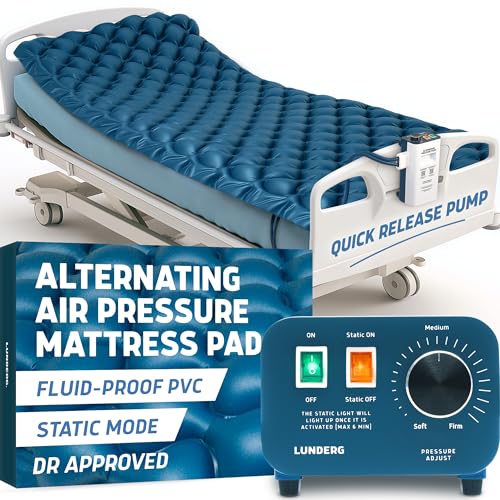
This model adds a Static Mode option, allowing all cells to remain inflated for a stable surface when alternation isn’t desired. It uses a quiet pump (23 dBA) and supports up to 300 lbs, making it suitable for home or hospital beds. The static mode is beneficial for patients who require longer sustained pressure relief without cycling.
Best for: Those who want the option to switch to a steady surface while still getting alternating relief on demand.
Caution: Static mode reduces the dynamic relief of alternating cycles, which may affect long-term pressure redistribution for some patients.
Kekoy Alternating Air Pressure Mattress Pad

With 130 air cells and a whisper-quiet pump, Kekoy emphasizes even weight redistribution to reduce pressure concentrations on vulnerable areas. The pad includes a waterproof cover and is designed to fit standard hospital bed dimensions. It is a straightforward option for bed sore prevention and early-stage care.
Best for: Care environments needing broad coverage across hips, back, and shoulders with a quiet, simple-to-operate system.
Caution: Some users may notice a short adaptation period as the 130-cell cycle stabilizes during initial use.
Careboda Alternating Air Pressure Mattress Pad
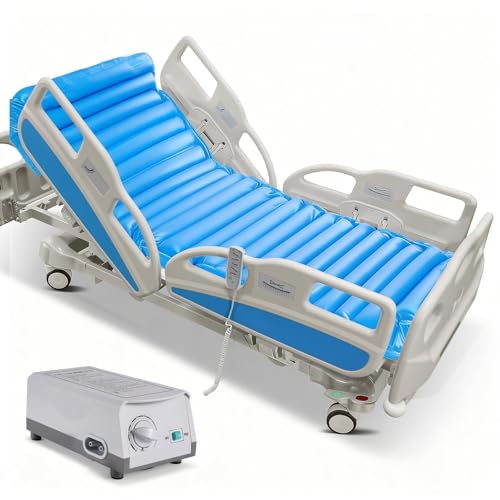
Careboda offers customizable pressure levels with ten settings and a quiet pump under 40dB. The unit includes easy installation hooks for attachment to bed frames, making it a practical choice for caregivers seeking efficient setup and adjustable pressure relief. The alternating cycle occurs every six minutes to reduce skin irritation and promote circulation.
Best for: Caregivers who prioritize adjustable firmness, simple installation, and a combination of quiet operation with reliable performance.
Caution: Quiet operation is good, but the setup may require leveling to ensure uniform cell inflation across the pad.
Buying Guide: Key Purchase Considerations
- Pressure relief coverage: Look for pads with 130-cell configurations or more to distribute weight across large surface areas, especially for users with back, hips, and heels at risk.
- Pump noise and cycling: Opt for units described as whisper-quiet or under 25 dBA for uninterrupted sleep, particularly in night-time use.
- Modes and controls: Decide between alternating only, static mode, or both. Static mode offers a stable surface, while alternating cycles provide ongoing pressure redistribution.
- Weight support: Verify weight capacity to ensure compatibility with the patient’s size and bed type (hospital bed vs. home bed).
- Ease of installation and maintenance: Machines with hooks or simple attachment mechanisms are easier to install. Waterproof covers help with maintenance and hygiene.
- Alerts and monitoring: Digital panels with alarms can aid caregivers by signaling pump malfunctions or required adjustments.
- Durability and material quality: Heat-sealed air cells reduce leaks; waterproof toppers help protect the mattress surface and extend product life.
FAQ
- What is the primary purpose of an alternating air pressure mattress pad?
Answer: To relieve pressure points by redistributing body weight, thereby reducing the risk of bed sores and improving blood circulation for bedridden individuals. - Who should consider a static mode option?
Answer: Caregivers or patients who prefer a stable sleeping surface for longer rest periods or during recovery phases. - How loud are these mattress pads typically?
Answer: Many models advertise 20–25 dBA to 40 dBA range, with some hospital-grade pumps being nearly whisper-quiet. - Can these pads be used at home?
Answer: Yes, most are designed for home use with hospital bed compatibility and simple setup. - Do all models require a separate pump?
Answer: Some replacements or pads require a partnered pump, while others come as complete kits with pump included. - Is higher cell count always better?
Answer: A higher cell count (like 130 cells) generally offers more even distribution, but overall performance also depends on pump quality and fit for the bed.