Best Anti Bedsore Air Mattress for Comfort and Prevention
When choosing an anti bedsore air mattress, look for adjustable alternating pressure systems, quiet pumps, and durable, waterproof covers. This guide highlights top options for different needs—home caregivers, hospital-like settings, and long-term bedridden care. The listed products are selected for reliable pressure redistribution, ease of use, and suitability for various bed sizes. Best for caregivers seeking proven relief, hospital-style setups, or portable options for home use.
Summary table of selected products:
- Vive Alternating Air Pressure Mattress Pad – Quiet, doctor-recommended relief with 130 air cells.
- Lunderg Alternating Air Pressure Mattress Pad (Static Mode) – Quiet pump, static mode option, supports up to 300 lbs.
- Careboda Alternating Pressure Mattress Pad – Ultra-quiet pump, breathable waterproof fabric, multi-level settings.
- Lunderg Queen Size Alternating Pad – Queen-sized, static mode, solid for larger beds.
- Kekoy Alternating Air Pressure Mattress Pad – Stage 1–2 care support, low-noise cycling, blue 75″ x 36″.
Vive Alternating Air Pressure Mattress Pad
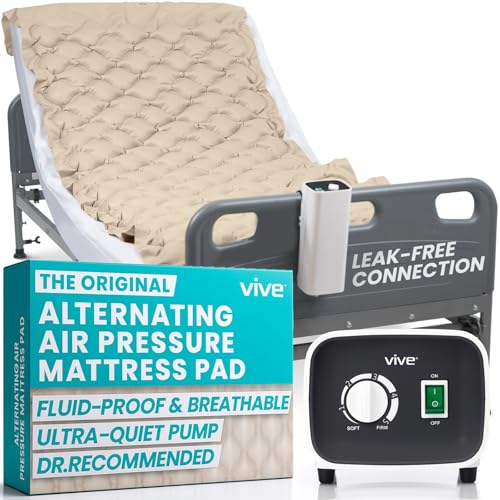
The Vive pad uses 130 air cells arranged to distribute weight and reduce pressure points. It features a whisper-quiet pump operating around 22 dBA and a heat-sealed cell design to prevent leaks. Best for bedridden users who require continuous pressure redistribution with minimal noise.
Best for: caregivers seeking a proven, hospital-grade feel with quiet operation. Why selected: strong emphasis on 130-cell therapy and durable construction. Caution: effectiveness depends on proper bed fit and regular maintenance of the pump and pad connections.
Lunderg Alternating Air Pressure Mattress Pad (Static Mode)
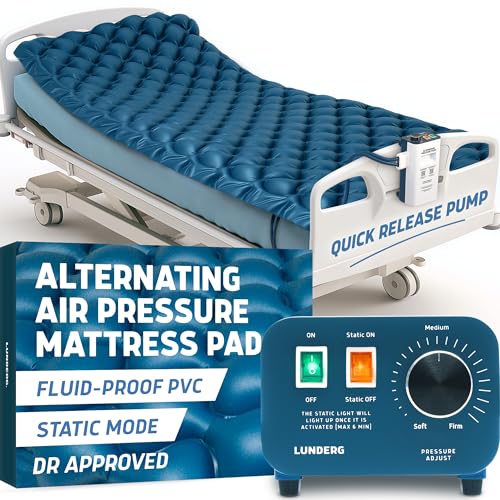
Designed for hospital-level prevention and home use, Lunderg offers an alternating cycle with an optional Static Mode. The whisper-quiet pump operates at about 23 dBA, with precise Soft-to-Firm control. It supports up to 300 lbs, making it suitable for larger patients and long-term care environments.
Best for: users who want the flexibility of alternating therapy plus a stable static option. Why selected: robust weight support and very quiet operation. Caution: static mode eliminates pressure relief cycling, which might not suit all users long-term.
Careboda Alternating Pressure Mattress Pad

Careboda emphasizes a quieter operation with a pump noise under 40 dB and multi-level settings. The medical-grade PVC fabric is breathable, waterproof, and easy to clean, with a layout designed to evenly distribute weight and relieve pressure points. Suitable for home care or hospital bed setups requiring consistent pressure relief.
Best for: caregivers needing quiet performance and easy cleaning. Why selected: strong balance of comfort, durability, and low noise. Caution: under heavy use, wear on fabric could occur; inspect seams regularly.
Lunderg Queen Size Alternating Pad
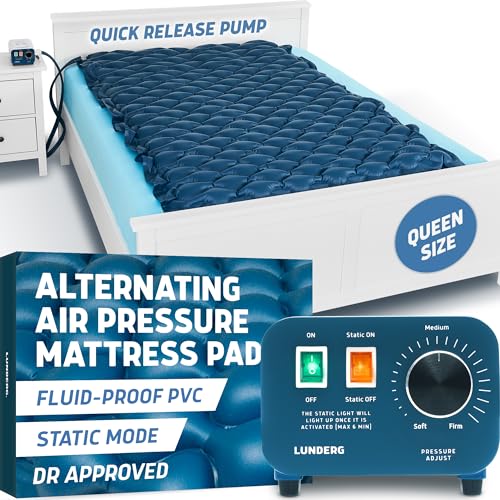
This queen-size kit is tailored for larger beds, measuring 53×77 inches and supporting up to 320 lbs. It includes a static mode option and a quiet pump with 23 dBA. The system aims to prevent and assist healing of bedsores by distributing pressure across a wider surface area.
Best for: households with queen or larger beds and higher weight requirements. Why selected: larger coverage area plus versatile control. Caution: larger footprint means more space needed under the bed frame; ensure mattress compatibility.
Kekoy Alternating Air Pressure Mattress Pad

Kekoy’s pad targets Stage 1–2 pressure care with alternating therapy and low air loss. It combines 75″ x 36″ dimensions with a blue waterproof surface and a whisper-quiet pump. The design supports redistribution to reduce skin stress on vulnerable areas and is suitable for home use or care facilities.
Best for: early-stage pressure care and budget-conscious setups. Why selected: practical compromise between size, noise, and protection. Caution: not ideal for very tall or oversized beds due to fixed dimensions.
Buying Guide: Choosing the Right Anti Bedsore Air Mattress
- Match mattress dimensions to bed size (twin, full, queen). Larger surfaces distribute pressure more evenly but require appropriate bed clearance.
- Look for alternating pressure with an automatic cycle, plus a possible static mode if rest requires a stable surface.
- Quieter pumps (below 25 dB) minimize sleep disruption. Consider models with dBA ratings listed in product specs.
- Waterproof, breathable, medical-grade PVC fabrics resist accidents and are easier to clean.
- Ensure the system supports the patient’s weight, especially for long-term care scenarios.
- Simple controls, clear indicators, and reliable seals reduce maintenance needs and improve daily use.
- Some pads are designed for home use, while others are hospital-grade with features optimized for nursing facilities.
- Look for removable, washable covers and easy-to-replace pads to extend the system’s life.
Frequently Asked Questions
- What is an anti bedsore air mattress? A mattress pad that uses alternating air pressure to redistribute body weight and reduce pressure ulcers in bedridden or limited-mobility individuals.
- Who should use these air mattresses? Best for bedridden patients, elderly care, and individuals at risk of pressure ulcers in hospital or home settings.
- Do these require professional installation? Most are designed for home use with straightforward setup; follow manufacturer instructions for connections and safety.
- Can static mode be used long-term? Static mode provides a stable surface; use as directed by care providers if alternating therapy is not needed.
- How do I maintain an alternating pressure pad? Regularly inspect seals and connections, clean the cover, and replace worn parts as recommended by the manufacturer.
- What size should I choose? Choose by bed size and the patient’s dimensions; larger sizes cover more surface area, aiding pressure distribution.