Best Alternating Pressure Mattress for Hospital Bed for Bedridden Care
When choosing an alternating pressure mattress for a hospital bed, look for devices that reliably relieve pressure, promote circulation, and minimize friction on fragile skin. This guide highlights five top options suited for different care needs, from long-term home use to hospital settings. The recommendations focus on products designed to prevent bedsores, support comfort, and operate quietly for restful sleep. Ideal buyers include family caregivers, home caregivers, and healthcare facilities seeking dependable pressure redistribution systems.
Summary table of selected products
| Product | Best For | Key Benefit |
|---|---|---|
| Vive Alternating Air Pressure Mattress Pad | Bedridden at home | 130 air cells with whisper-quiet pump |
| MedVance Low Air Loss Mattress | Hospitals & long shifts | Ultra-quiet pump; digital monitoring |
| Lunderg PressuRelief Alternating Pad | Comfort-focused care | Soft Comfort Layer; quiet operation |
| Vive 8″ Alternating Pressure Mattress | Preventing ulcers in multi-use beds | 16 air chambers; quiet pump |
| Lunderg Alternating Pad With Static Mode | Static-mode preference | Static mode option; doctor recommended |
Below you’ll find detailed profiles of each product. Each section explains who benefits most, why the product was selected, and a practical caveat to consider during purchase.
Vive Alternating Air Pressure Mattress Pad
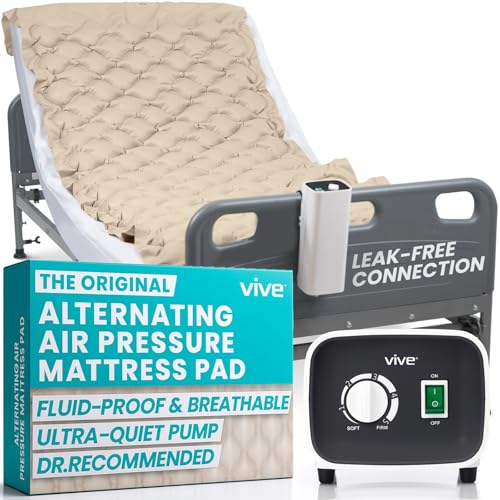
The Vive pad uses 130 air cells with a wave-like therapy to distribute weight evenly and reduce pressure points. It is designed for bedridden users who cannot shift weight frequently. The whisper-quiet pump, operating around 22 dBA, provides multiple pressure levels for a customizable experience. This setup helps address skin maceration and bedsores by promoting better circulation.
Best for: caregivers seeking a relatively quiet, high-cell-count mattress pad for home use. Choose this if silent operation and consistent pressure redistribution are priorities. Caution: ensure the pump’s airflow remains uninterrupted to maintain therapy cycles.
MedVance Medical Low Air Loss Mattress

This system emphasizes ultra-quiet performance with a digital medical-grade pump and an LED display. It includes a fast-inflation capability and a CPR-deflate function for emergencies. The air-cell design helps prevent bottoming out and provides long-running support with a 24-hour power-outage protection feature. An alarm system supports patient monitoring during care shifts.
Best for: hospital environments or caregivers who require precise digital control and reliable out-of-bed safety features. Better for: users who need a quiet, professional-grade solution with rapid deflation in urgent situations. Caution: data indicates a relatively advanced setup—proof of concept should be validated with caregivers before long-term use.
Lunderg PressuRelief Alternating Pad

Designed to solve common comfort complaints, this Lunderg pad adds a PressuRelief comfort layer for a softer, more familiar feel. It uses gentle wave-like alternating therapy to relieve pressure, boost circulation, and reduce turning. The unit includes a quiet pump and offers a static mode option for when alternating therapy isn’t needed.
Best for: caregivers seeking additional comfort features and a familiar feel for long nights. Choose this if you want both alternating cycles and a soft surface. Limitation: some users may prefer a fully rigid static mode for certain sleep postures.
Vive 8″ Alternating Pressure Mattress

This mattress features 16 air chambers and a variable pressure pump for customizable relief. The pressure system aims to prevent pressure ulcers and bedsores by distributing weight across multiple cells. A static setting remains available for general use, providing a stable surface when needed. The ultra-quiet pump helps maintain restful sleep during therapy cycles.
Best for: users who want a multi-chamber design with strong protection against bedsores. Better for: environments where a combination of alternation and static support is useful. Caution: ensure bed frame compatibility with the mattress dimensions to avoid gaps or misalignment.
Lunderg Alternating Pad With Static Mode
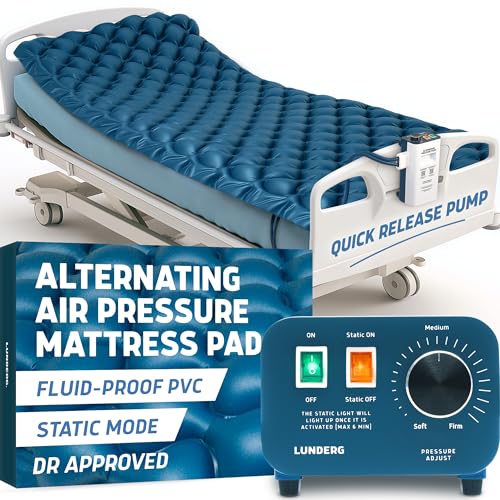
This Lunderg model combines alternating therapy with a dedicated Static Mode, offering continuous full-inflation support when required. It supports hospital beds and home setups and is designed to handle up to 300 lbs. The pump operates quietly at about 23 dBA, providing precise soft-to-firm pressure control. It is doctor-recommended for bed sore prevention and healing.
Best for: homes and facilities that appreciate a straightforward switch to static support without sacrificing relief. Choose this if you prefer a simple transition from alternating to static. Caution: verify the weight limit and bed fit before purchase to ensure compatibility with your setup.
Buying Guide: What to Consider When Choosing an Alternating Pressure Mattress
- Intended environment: Home care vs. hospital use. Look for models with quiet pumps and reliable alarms to suit shifts and overnight care.
- Number of air cells: More cells usually provide smoother pressure redistribution. Higher cell counts may offer better comfort for extended use.
- Static mode option: If you want a non-alternating surface for certain nights, static mode is beneficial.
- Weight capacity: Confirm the mattress supports the user’s weight and bed frame compatibility to avoid sagging or gaps.
- Pump noise and reliability: Ultra-quiet pumps reduce caregiver disturbance and help patient rest; check for durability and ease of use.
- Maintenance: Look for durable seals and simple cleaning requirements, especially for waterproof covers.
- CPR/deflate features: In emergencies, fast deflation can be critical for patient safety.
- Power backup options: Some models offer outage protection or alarms; consider your facility’s power reliability.
Frequently Asked Questions
- What is an alternating pressure mattress and how does it help bedsores?
It alternates inflation and deflation across air cells to redistribute pressure and improve circulation, reducing prolonged contact on vulnerable areas. - Which features are most important for home use?
Quiet pumps, a comfortable surface, a waterproof cover, and straightforward operation are key for daily use at home. - Is static mode useful for certain patients?
Yes. Static mode provides a stable surface when alternating cycles are not needed, improving sleep for those who prefer consistency. - Are these products compatible with most hospital beds?
Most are designed to fit standard hospital bed frames, but always verify dimensions and bed width/length before purchasing. - Do these mattresses require professional setup?
Many are user-installable, but follow manufacturer instructions. Some models may benefit from clinician assistance for optimal placement. - How long should the alternating cycles run each day?
Typical cycles run in six-minute intervals, but some models allow customization for patient comfort and care protocols.