Best Alternating Air Pressure Mattress Solutions for Bed Sores Prevention
Answering the search intent for caregivers and patients seeking relief from pressure ulcers, these alternating air pressure mattresses distribute weight, improve circulation, and reduce bed sores. The top picks below are best for bedridden users, long-term care, or home use under medical guidance. This guide highlights who each product is best for, why it was chosen, and any limitations to note. A quick summary table follows to compare key points at a glance.
| Product | Best For | Key Benefit |
|---|---|---|
| Vive Alternating Air Pressure Mattress Pad | Bedridden patients needing gentle relief | 130 air cells with whisper-quiet pump |
| Lunderg Alt. Air Pressure Mattress Pad (Static Mode) | Users needing customizable static option | Quiet operation with static mode |
| MedVance Premium Alternating Mattress Pad | Home or facility use with alarms | Ultra-quiet, digital control with alarms |
| Vaunn Medical Cloud Mattress Topper | Individuals requiring steady airflow and warmth balance | Air Lift Technology and 130-cell therapy |
| Kekoy Alternating Mattress Pad | Care at home with emphasis on comfort | Low air loss, 10–12 minute cycles |
Vive Alternating Air Pressure Mattress Pad
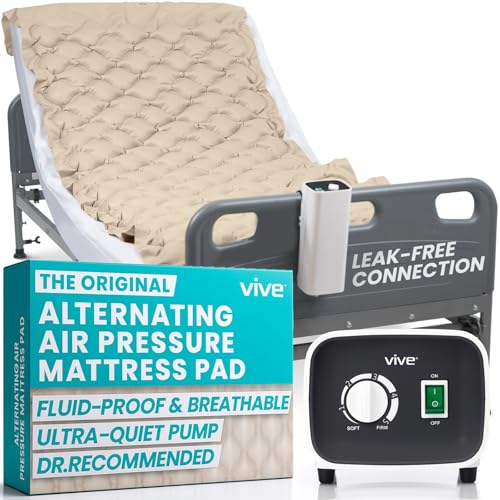
The Vive pad uses 130 air cells with a proprietary wave-like therapy to evenly distribute weight and reduce pressure points. It features a whisper-quiet pump rated around 22 dBA, with customizable pressure levels. Best for bedridden individuals who need steady, gentle relief without loud operation. A potential limitation is the pump’s cycle duration and the need for proper cell maintenance to prevent leaks over time.
Who it’s best for: caregivers seeking a balance of quiet operation and effective pressure relief for long periods of bed rest. Why selected: its 130-cell design and quiet pump provide consistent surface relief with minimal disruption to sleep.
Caution: ensure proper placement on a compatible mattress, and monitor for any air leaks around seals.
Lunderg Alternating Air Pressure Mattress Pad (Static Mode)
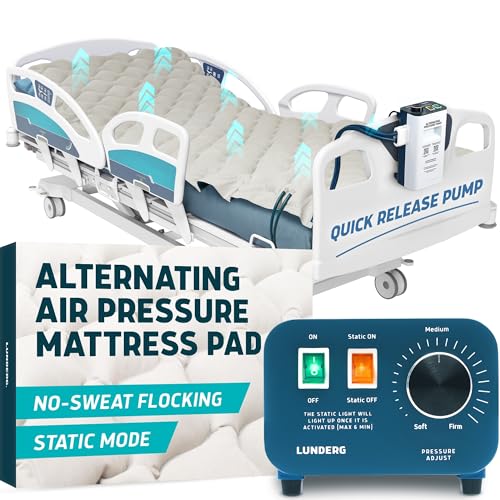
This Lunderg model emphasizes a quieter experience with an added Static Mode option, allowing the surface to stay fully inflated when needed. It uses a soft-to-firm control approach and includes a quiet pump at around 23 dBA. Best for users who sometimes prefer a stable surface rather than alternation. Caution: static mode reduces pressure relief cycling, so it’s less suitable for users who rely on continuous movement therapy.
Who it’s best for: home caregivers or facilities that want a flexible surface with an occasional steady mode. Why selected: the static mode provides a useful option for patients who dislike frequent changes in firmness.
MedVance Premium Alternating Mattress Pad

MedVance pairs an ultra-quiet digital pump with a dual-core design to deliver steady airflow and automated 6-minute cycles. The system is designed for bed sore prevention and recovery, with a digital panel and alarms to support care monitoring. Best for users needing reliable cycle timing and alarm features for ongoing monitoring. Caution: digital alarms require regular power supply and battery readiness for uninterrupted function.
Who it’s best for: caregivers in home or facility settings who value precise control and monitoring. Why selected: the digital control and alarms help manage patient comfort and safety over long periods.
Vaunn Medical Cloud Mattress Topper

Vaunn’s Cloud Topper uses revolutionary Air Lift Technology and a 130-cell wave therapy to distribute constant airflow. This model emphasizes improving circulation and reducing pressure spots while maintaining a cool, comfortable surface. Best for users who need consistent airflow and a soothing sleep surface. Caution: the displayed dimensions should match the bed to avoid fit issues on non-standard frames.
Kekoy Alternating Mattress Pad

Kekoy combines alternating pressure with low air loss, featuring a 10–12 minute cycle and a durable, heat-resistant surface suitable for home care. Best for long-duration use where airflow and relief are needed without frequent re-flating. Limitation: users should check for compatibility with existing bed rails and mattress toppers for stability.
Buying Guide: Key Considerations For Choosing
What surface will you place the topper on? A compatible, firm base mattress helps maximize pressure redistribution. Consider cell count and cycle timing: more cells and regularly timed cycles improve even support. Is quiet operation important? Look for pumps under 25 dBA for restful sleep. Do you need alarms or digital controls? If yes, prioritize models with built-in alarms and easy digital interfaces. Are static mode options useful? Static or semi-static modes can provide a stable surface during certain tasks or rest periods. How often will it be used? For long-term, hospital-style use, durability and support up to 300 pounds may matter. Finally, check maintenance needs and leak resistance to ensure longevity.
Practical Recommendations By Use Case
- Best for sleep-focused relief: Vive Alternating Air Pressure Mattress Pad—strong cycle design and ultra-quiet pump.
- Best for flexible comfort: Lunderg with Static Mode—option to switch to a stable surface when needed.
- Best for monitoring care: MedVance Premium with alarms—helpful in home or facility settings.
- Best for steady airflow balance: Vaunn Cloud Mattress Topper—Air Lift Technology with comprehensive circulation.
- Best value with comprehensive relief: Kekoy Pad—alternating pressure with low air loss at a reasonable price point.
Frequently Asked Questions
- What is an alternating air pressure mattress good for? It redistributes weight in cycles to reduce pressure on vulnerable areas and improve skin health for bedridden users.
- Do these toppers require professional installation? Generally no; most units are designed for easy setup on standard beds with minimal tools.
- How long should a cycle last? Many models cycle every 6–12 minutes; consult product details for exact timing.
- Are there safety concerns? Look for models with alarms and automatic deflation features in emergencies, especially for dependent patients.
- Can static mode be used long-term? Static mode can be useful for comfort, but it reduces ongoing pressure relief—use as appropriate for the care plan.
- Is a higher cell count always better? More cells can provide finer pressure distribution, but overall effectiveness depends on design, pump quality, and cycle control.