Best Alternating Air Mattress for Hospital Beds: Top Picks for Bedridden Comfort
When choosing an alternating air mattress for a hospital bed, look for products that promote pressure relief, reduce skin breakdown, and offer quiet operation for restful sleep. These options are best for caregivers seeking reliable relief for bedridden patients, seniors, or anyone at risk for bedsores. The following selections emphasize durability, ease of use, and effective pressure redistribution. A quick summary table of the featured products is provided below to help buyers compare at a glance.
| Product | Best For | Key Benefit |
|---|---|---|
| Vive Alternating Air Pressure Mattress Pad | Bedridden patients needing immediate pressure relief | 130 air cells with wave-like therapy |
| MedVance Low Air Loss Mattress System | Long-term care with alarms | Ultra-quiet pump and digital diagnostics |
| Vive 8″ Alternating Pressure Mattress | General hospital bed users | Static head cells option plus full alternation |
| Lunderg Alternating Mattress Pad (Static Mode) | Home or hospital bed users needing quiet sleep | Static mode for rest without cycling |
| Lunderg With Flocking Add-on | Comfort-focused bed sores prevention | Breathable, fabric-like surface |
Vive Alternating Air Pressure Mattress Pad
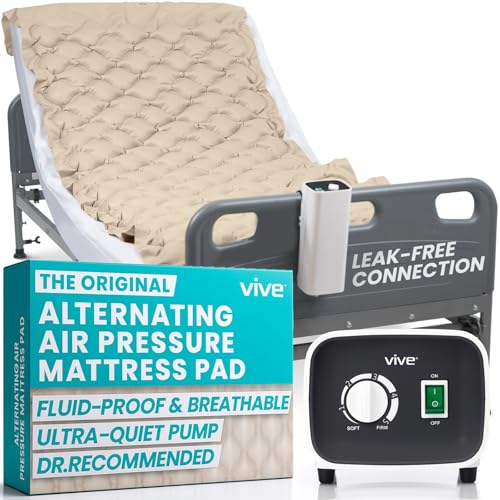
This model provides doctor-recommended relief for bedsores and ulcers by promoting circulation and redistributing weight. It is best for immobilized or bedridden patients who cannot shift position independently. The 130 air cell array creates a wave-like therapy surface that continuously relieves pressure points, while a whisper-quiet pump keeps disturbances to a minimum. The product’s durability is enhanced by heat-sealed cells to prevent leaks.
Who it’s best for: caregivers seeking an easy-to-use, hospital-grade topper that reduces skin breakdown and improves comfort for long hours in bed. Limitation: the six-minute cycle may feel repetitive for some patients who prefer longer cycles.
MedVance Medical Low Air Loss Mattress System

This system emphasizes quiet operation and quick inflation with a digital LED display. It Includes emergency CPR deflation capability and alarm diagnostics, making it suitable for facilities and home care where monitoring is essential. The 8-inch air cell design helps prevent bottoming out and offers up to 24 hours of outage protection, with a pillow function at the head for comfort in static mode.
Who it’s best for: caregivers needing a reliable, hospital-grade system with clear digital controls and safety features. Caution: the device’s complexity may require some initial setup.
Vive 8″ Alternating Pressure Mattress

Designed to prevent pressure spots, this mattress includes 16 air chambers with a variable pump to customize pressure. Its unique feature is the head-end static three-cell pillow, which maintains comfort while the rest of the surface alternates. A quiet pump helps ensure a peaceful sleep environment, and the static option provides a stable surface when needed.
Who it’s best for: users who want a balance of active pressure relief and a dependable static head support. Limitation: some users may prefer a larger upgrade to a higher-capacity system for very heavy bed users.
Lunderg Alternating Air Pressure Mattress Pad (Static Mode)
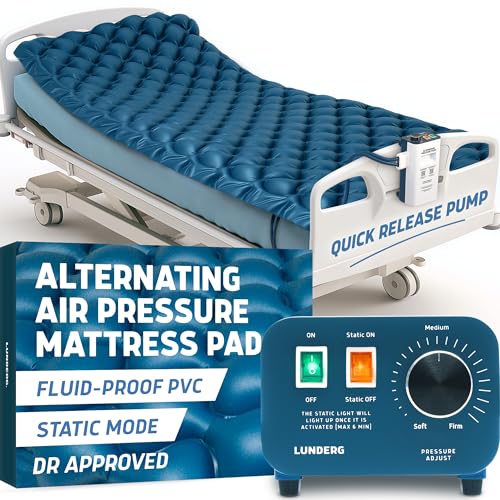
Officially doctor- and therapist-approved for bedsores, this pad relieves pressure on skin and boosts circulation. It adds a static mode for uninterrupted rest and supports up to 300 lbs, making it suitable for home and hospital use. The quiet pump and quick connector simplify setup and daily use.
Who it’s best for: home caregivers who want a reliable option with a switchable static mode and strong weight support. Caution: static mode may reduce relief if not paired with periodic movement.
Lunderg With Flocking Add-On Mattress Pad
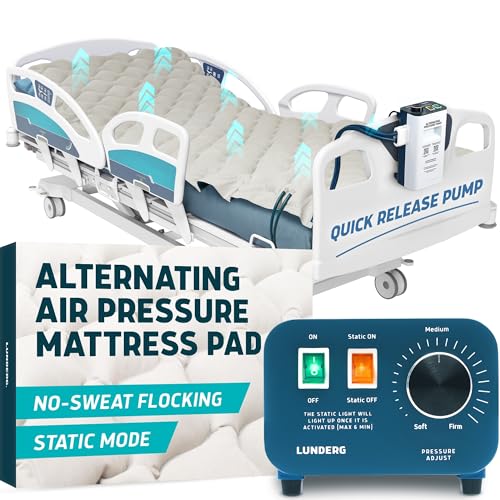
This option uses a flocked, fabric-like surface designed to be cooler and more breathable than vinyl. It combines alternating pressure with a static option and features quiet operation. The flocking adds comfort for extended rest, complementing care plans aimed at preventing bedsores.
Who it’s best for: families seeking a breathable, comfortable surface with enhanced airflow and a softer feel. Limitation: flocked surfaces may require careful cleaning to maintain longevity.
Kekoy Alternating Air Pressure Mattress Pad

With an emphasis on advanced stage 1–2 pressure care, this pad redistributes weight across multiple air cells and uses low air loss technology to keep skin cooler and drier. It provides extended comfort for long-term bed rest and is suitable for home care or hospital settings. The surface design aims to reduce sudden pressure changes for smoother transitions.
Who it’s best for: users needing dual therapy (alternating pressure plus low air loss) to help prevent early-stage pressure injuries. Caution: may require proper fitting to maximize coverage on wider beds.
Drive Medical Med-Aire System

Drive Medical’s system emphasizes targeted pressure relief and a protective surface with moisture-wicking capabilities. It uses a modular design with replaceable bladders to maintain stability and reduce friction. The pillow feature supports head comfort during static periods, aiding in rest for bed-bound patients.
Who it’s best for: facilities or households seeking a modular, adjustable system with moisture management. Caution: system setup may be more involved than simpler toppers.
MedVance Premium Alternating Mattress Pad

This pad features an ultra-quiet digital pump with alarms and dual pump cores for consistent airflow. The system alternates every six minutes to redistribute weight and enhance circulation. It is designed for bed sore prevention and recovery, making it a solid top-tier option for long-term care environments.
Who it’s best for: caregivers prioritizing quiet operation, alarm-based monitoring, and reliable pressure relief in home or facility care. Limitation: higher price point may be a consideration for some buyers.
Buying Guide: Key Considerations For Choosing An Alternating Air Mattress For Hospital Beds
- Pressure relief and cycle timing: Look for systems with regular cycling (roughly every 6–12 minutes) to minimize pressure buildup on vulnerable areas.
- Noise level: Silent or whisper-quiet pumps (around 20–23 dBA) help ensure uninterrupted sleep for patients and caregivers.
- Surface design: Decide between standard alternating pressure with breathable surfaces versus low-air-loss surfaces to manage moisture and skin condition.
- Head support: A fixed head pillow or static cells can improve comfort during static periods and reduce neck strain.
- Weight capacity: Confirm the mattress top is rated for the patient’s weight, especially for home use with heavier individuals.
- Mode options: Static (non-alternating) mode can be useful for resting periods or caregiver breaks while still providing a comfortable surface.
- Durability and maintenance: Heat-sealed air cells prevent leaks; consider ease of cleaning and guard against moisture buildup.
- Alarm and safety features: Digital alarms or CPR quick-deflate features improve safety in clinical environments.
Frequently Asked Questions
- What is an alternating air mattress? An alternating air mattress uses inflatable cells that cycle in and out to redistribute weight and relieve pressure on the skin.
- Who should consider one for a hospital bed? Primarily bedridden or immobile patients at risk for bedsores, and caregivers seeking improved comfort and skin protection.
- Is a low air loss option better than standard alternating pressure? Low air loss can help keep skin drier and cooler, which may benefit patients with moisture sensitivity.
- Do these mattresses require special maintenance? Regular cleaning of surfaces and ensuring the pump remains free of obstruction can help prolong life.
- Can static mode be useful? Yes, static mode provides a stable sleeping surface when continuous cycling is not necessary or when comfort is preferred during rest.
- Are these products suitable for home use? Many are designed for home care but may also meet facility standards; verify the weight limit and setup requirements for home use.