Best Air Mattress for Bedsores: Top Relief Solutions for Long-Term Care
When choosing an air pressure mattress pad for preventing and managing bed sores, look for models with alternating pressure cycles, low-noise pumps, and durable, washable covers. This guide highlights five options ideal for bedridden patients, home caregivers, and hospital settings. Each product is chosen for its potential to improve circulation, relieve pressure points, and support safer, more comfortable rest. The best pick depends on care setting, mobility, and noise tolerance.
Summary table of selected products:
| Product | Best For | Key Benefit | Limitations |
|---|---|---|---|
| Vive Alternating Air Pressure Mattress Pad | Home care and mild-to-moderate bed sores | 130-cell cycling with whisper-quiet pump | Still requires regular maintenance |
| Lunderg Alternating Air Pressure Mattress Pad with Static Mode | Users needing a break from alternation | Static mode and quiet operation | Static mode reduces pressure relief during cycles |
| MedVance Premium Alternating Air Pressure Mattress Pad | Long-term care and care facilities | Ultra-quiet, dual-pump system | Digital panel may require setup |
| Vaunn Medical Cloud Air Whisper Quiet | Extended bed rest | Advanced wave therapy with 130 cells | Single size may limit larger beds |
| Kekoy Alternating 130-Cell Mattress Pad | Home or hospital use with ongoing prevention | 130 bubble cells with quiet pump | Covered upholstery may vary by model |
Vive Alternating Air Pressure Mattress Pad
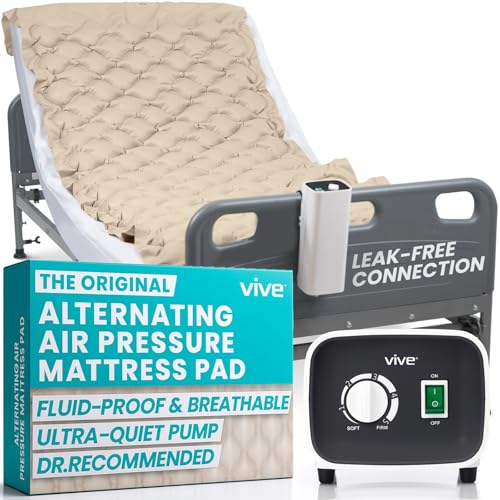
Best for bedridden patients who need steady pressure redistribution along the whole body. This pad uses 130 air cells with an alternating cycle to relieve pressure points and improve circulation. The doctor-recommended design focuses on preventing skin maceration and promoting comfort during long rest. The whisper-quiet pump runs at about 22 dBA, enabling restful sleep without noticeable noise.
Who it’s best for: caregivers seeking a hospital-grade feel at home, especially for patients who cannot shift positions often. Why selected: the 130-cell arrangement provides comprehensive surface coverage, and the quiet pump minimizes sleep disruption. Limitation: the system relies on a separate pump and may require proper tube care to avoid leaks.
Lunderg Alternating Air Pressure Mattress Pad with Static Mode
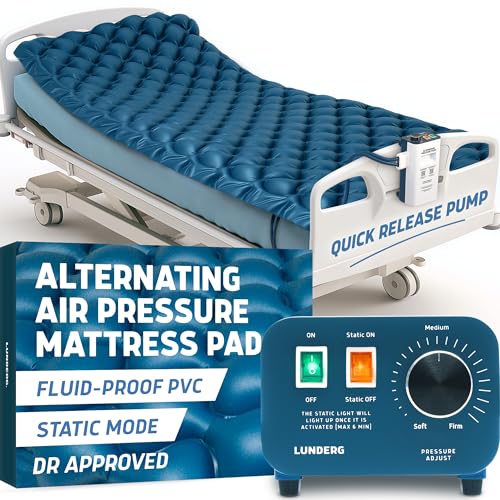
Best for users who want the option to switch from alternating cycles to a Static Mode for stable support. This model offers quiet operation (about 23 dBA) and precise Soft-to-Firm pressure control. It supports hospital bed or home mattresses up to 300 lbs, making it suitable for longer care scenarios and larger users. Caution: if alternating relief is temporarily unnecessary, Static Mode reduces the dynamic pressure relief that some patients rely on.
Who it’s best for: patients needing a break from continuous alternation or caregivers prioritizing a simple, stable surface. Why selected: the dual-mode capability provides flexibility for varying comfort needs throughout a care plan. Limitation: not all users will benefit from avoiding alternation for extended periods.
MedVance Premium Alternating Air Pressure Mattress Pad

This option emphasizes ultra-quiet operation with a hospital-grade, digital-controlled pump and dual cores for reliable airflow. It cycles every six minutes to distribute weight evenly, reduce pressure buildup, and improve circulation—key features for bed sore prevention and recovery in long-term care settings. It includes an alarm-enabled control panel to aid caregivers managing more complex care routines.
Who it’s best for: facilities and families seeking robust, low-noise performance in a hospital bed or home care setting. Why selected: the digital panel and dual-core pump support precise adjustments and consistent pressure relief. Limitation: the setup may require more familiarity with digital controls and maintenance for optimal performance.
Vaunn Medical Cloud Air Whisper Quiet Mattress Topper

Best for extended bed rest with a focus on gentle, continuous airflow and skin health. Vaunn’s system features 130 pre-programmed air cells and a wave-like therapy algorithm to promote circulation and relieve pressure spots while maintaining a cooler sleeping surface. It’s designed to help prevent skin maceration and manage discomfort associated with long-term immobilization.
Who it’s best for: users needing a steady, evenly distributed pressure relief without abrupt changes. Why selected: the Air Lift Technology distributes airflow effectively and supports comfort over longer rest periods. Limitation: as a standalone topper, it may not provide the same level of platform support as larger hospital bed toppers for all users.
Kekoy Alternating 130-Cell Mattress Pad

Best for comprehensive bed sore prevention with high cell density and a whisper-quiet pump. Kekoy’s 130-bubble air cells alternately inflate and deflate to redistribute weight evenly. The top features include 130 bubble cells and a waterproof heat-resistant ulcer cushion pad for home use and hospital settings. It is well-suited for users who require consistent pressure relief across a wide surface area.
Who it’s best for: home caregivers and healthcare facilities needing thorough coverage and relatively compact dimensions. Why selected: the 130-cell design ensures even surface pressure distribution and adds a protective waterproof cushion for ease of cleaning and skin protection. Limitation: some users may need more side support with wider bed configurations.
Buying Guide: Key Considerations For Buying An Air Mattress Pad For Bedsores
Pressure relief goals: Look for models with alternating pressure cycles to prevent constant pressure on any single area. Consider cycle duration (typically 6–12 minutes) and how evenly the cells distribute weight.
Noise level: A quieter pump improves sleep quality for patients and caregivers. If possible, choose products advertised as whisper-quiet (generally under 25 dBA).
Surface durability and cleanliness: Waterproof covers and easy-clean materials help reduce infection risk. Heat resistance is beneficial if the surface is exposed to heat sources or prolonged use.
Weight support and bed compatibility: Check weight limits and bed dimensions. Hospital-grade toppers often support heavier users, while home models may be lighter but adequate for most patients.
Modes and control features: Static mode can be useful for rest days when alternation isn’t needed. Digital controls with alarms can aid caregivers in monitoring care routines.
Maintenance and durability: Look for heat-sealed cells and long-lasting materials. Replaceable pads are advantageous if spills or wear are common in daily use.
FAQ: Quick Answers For Bed Sore Prevention Mats
Q: Do alternating pressure mattresses prevent bed sores entirely?
A: They reduce risk by redistributing pressure but do not eliminate it. Regular repositioning and skin assessments remain important.
Q: How loud are these pumps in practice?
A: Most options target under 25 dBA, comparable to a quiet room, but actual noise can vary with room acoustics and setup.
Q: Can these toppers be used at home?
A: Yes. Many are designed for home care and hospital beds, with user-friendly controls and washable covers for everyday use.
Q: Are there maintenance tips for extending pad life?
A: Regularly inspect for leaks, keep air connections clean, and follow manufacturer guidelines for cleaning and replacement parts.
Q: What should I consider for caregivers with limited mobility?
A: Look for static mode options, clear digital controls, and larger surfaces that cover more area to reduce frequent repositioning.
Choosing an air mattress pad for bedsores involves balancing cycle effectiveness, noise, durability, and user comfort. The five options highlighted above offer different strengths to fit varied care environments, from home settings to long-term care facilities. Use the buying guide and FAQ to tailor your choice to the patient’s needs and daily care routine.