Best Air Flow Mattress for Hospital Bed — Pressure Relief Solutions for Bedridden Care
Answering your search for effective air flow mattresses for hospital beds, this guide compares five top options to help prevent bed sores, improve circulation, and boost patient comfort. Each pick is suited to different care settings, from home use to clinical environments. Choose based on user weight, need for quiet operation, and whether static or alternating pressure suits the patient best.
Summary table of selected products
| Product | Brand | Best For |
|---|---|---|
| Vive Alternating Air Pressure Mattress Pad | Vive | Bedridden patients needing continuous alternating pressure and ultra-quiet operation |
| Lunderg Alternating Air Pressure Mattress Pad with Static Mode | Lunderg | Caregivers who want both alternating therapy and a static mode |
| MedVance Low Air Loss Mattress Replacement System | MedVance | Hospitals or home care requiring digital control and alarms |
| Drive Medical Med-Aire Low Air Loss Mattress | Drive Medical | Long-term care or facility use with durable, replaceable bladders |
| Kekoy Alternating Air Pressure Mattress Pad | Kekoy | Home caregivers seeking heat-resistant, broad coverage in a budget-friendly pack |
Vive Alternating Air Pressure Mattress Pad
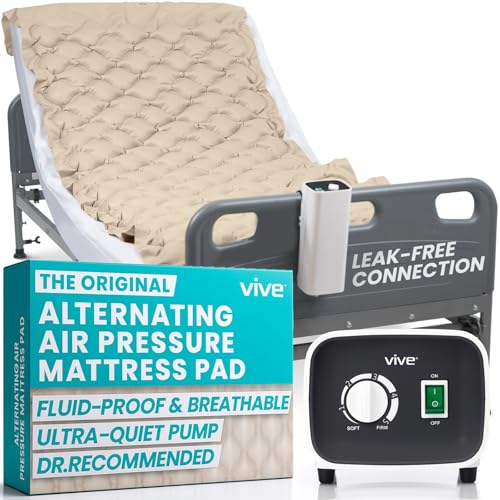
Best for bedridden users who need ongoing pressure redistribution. The 130 air cell design uses a wave-like therapy to evenly distribute weight, reducing pressure spots and skin maceration. A whisper-quiet pump (22 dBA) enables restful sleep with multiple pressure levels and six-minute cycles. Suitable for home care or clinical settings where quiet operation matters.
Selected for: strong densification of pressure relief, low noise, and durable cell sealing. Caution: some caregivers may prefer a couple of alternate configurations if mobility is highly limited.
Lunderg Alternating Air Pressure Mattress Pad with Static Mode
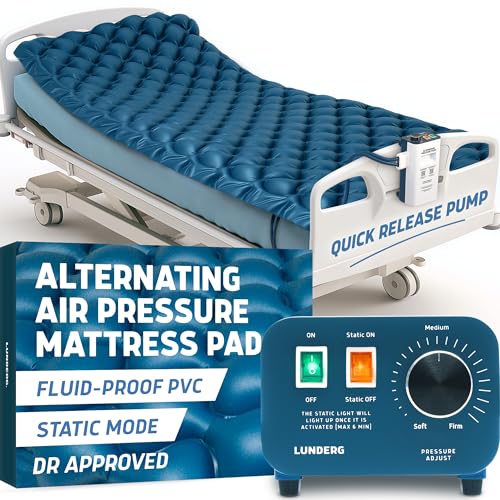
Best for caregivers who want both pressure relief and a stable surface. Lunderg combines alternating cycles with a Static Mode and a quiet 23 dBA pump, plus a 300 lb weight capacity for home or hospital bed use. Static Mode prevents continual deflation, which can be comforting for certain patients during rest. Consider for long-term care settings where turning is challenging.
Selected for: flexibility of therapy modes and suitability for heavy patients. Caution: static mode reduces dynamic relief while engaged, so alternating therapy may be preferred for active pressure management.
MedVance Low Air Loss Mattress Replacement System

Best for hospital-grade care with digital control and alarms. This 8-inch mattress uses a low air loss design with cell-on-cell construction to prevent bottoming out and supports up to 24 hours of outage protection. The digital LED screen provides weight and pressure data and includes a fast-acting CPR deflation feature for emergencies. Ideal for skilled nursing or home hospital beds that require precise monitoring.
Selected for: robust digital controls and alarm features. Caution: alarm-dependent caregivers should ensure the system is monitored to respond quickly to alerts.
Drive Medical Med-Aire Low Air Loss Mattress

Best for long-term care settings needing durable, replaceable bladders and integrated moisture management. The system uses 20 replaceable bladders to deliver targeted support and a vapor-permeable cover to reduce moisture and heat buildup. It emphasizes immersion and stability for extended bed rest and comfort. Consider for facilities or homes with high infection control and moisture management needs.
Selected for: modular bladder design and moisture management. Caution: setup and maintenance may require some ongoing caregiver attention for optimal performance.
Kekoy Alternating Air Pressure Mattress Pad

Best for home care on a budget, Kekoy combines alternating pressure therapy with a moisture-desirable waterproof, heat resistant ulcer cushion. The 75″ x 36″ size fits many standard hospital bed toppers, offering a practical option for extended care at home. Caution: check size compatibility with your bed frame before purchase.
Buying Guide
- What therapy mode do you need? Choose alternating pressure for ongoing redistribution, or static mode for a stable surface during rest periods.
- Weight capacity and bed size matter. Ensure the pad or system supports the patient’s weight and fits the hospital bed dimensions.
- Noise level can affect sleep quality. If quiet operation is critical, look for pumps rated around 20–23 dBA.
- Moisture management is essential. Consider vapor-permeable covers and moisture-wicking or breathable materials to reduce skin maceration.
- Digital controls and alarms offer easy monitoring. These features are valuable in home care or facility settings for quick adjustments and safety checks.
- Maintenance and durability. Look for sealed air cells or flocked surfaces that resist leaks and are easy to clean.
- Emergency features. Some models include rapid deflation or alarm systems; assess how promptly caregivers can respond in urgent situations.
FAQ
- What is an air flow mattress used for?
It redistributes body weight to relieve pressure on vulnerable areas, helping prevent bed sores during extended bed rest.
- How quiet are these pumps?
Many models operate at 20–23 dBA, which is designed to be quieter than a soft whisper for better sleep.
- Do these mattresses require professional setup?
Most are designed for home use with straightforward setup, but heavier systems may benefit from an assisted installation.
- Can I use these on any hospital bed?
Most are compatible with standard hospital bed toppers, but always confirm bed dimensions and connector compatibility before purchasing.
- Are static mode and alternating mode both effective?
Yes; alternating mode provides dynamic pressure relief, while static mode offers a stable surface for rest—ideal for different patient needs.
- What is low air loss?
Low air loss systems keep skin cooler and drier by allowing minor airflow between cells, reducing moisture buildup.